


Smart bins and fill-level sensors: when smart collection actually pays off
Smart bins, compaction and fill-level sensors: when smart collection pays off and how to assess data, routes and costs. Bunder Waste Technology guide.
Read article


The management of a territory requires equipment, means and technologies that must function in a coordinated manner. Municipalities, environmental managers and service companies find themselves having to manage different needs on a daily basis: organizing waste collection, keeping public spaces clean, equipping parks and urban areas, moving materials and making interventions in the area more efficient.
The digital component is progressively added to these needs, with sensors, monitoring systems and platforms that allow the collection of information on the functioning of the equipment and the organization of services.
In this scenario, choosing individual products is not enough. It is necessary to evaluate how the different solutions fit into the operational organization and what relationships they must have between them.

An interlocutor specialized in urban hygiene, street furniture, electric mobility and IoT technologies can help institutions and managers coordinate these needs, identifying products from different producers and building proposals consistent with the characteristics of the territory.
This is the role of Bunder Company: a distributor who supports the customer in the assessment of needs, in the selection of technologies and in the coordination of supplies, putting the solution to the operational problem at the center and not the sale of the most expensive product.
An urban hygiene service involves equipment, containers, collection vehicles, support vehicles and, increasingly, digital monitoring systems.
These items are frequently purchased through different suppliers, each specializing in a certain category.
The specialization of producers represents an advantage, because it allows access to products and technologies developed for specific needs. However, when each purchase is managed separately, it can become more complex to coordinate supply characteristics, timing, configurations and operational needs.
A technical-commercial interlocutor can help simplify this process.
It does not necessarily mean purchasing everything from a single manufacturer or through a single contractual supply. It means being able to count on a person who knows the different product categories, understands the customer's needs and can coordinate the relationship with specialized producers.
For a municipality or an environmental manager this approach can be useful when a project includes multiple elements, for example:
Knowledge of the different technologies allows us to evaluate supplies not only individually, but also in relation to the service they must support.
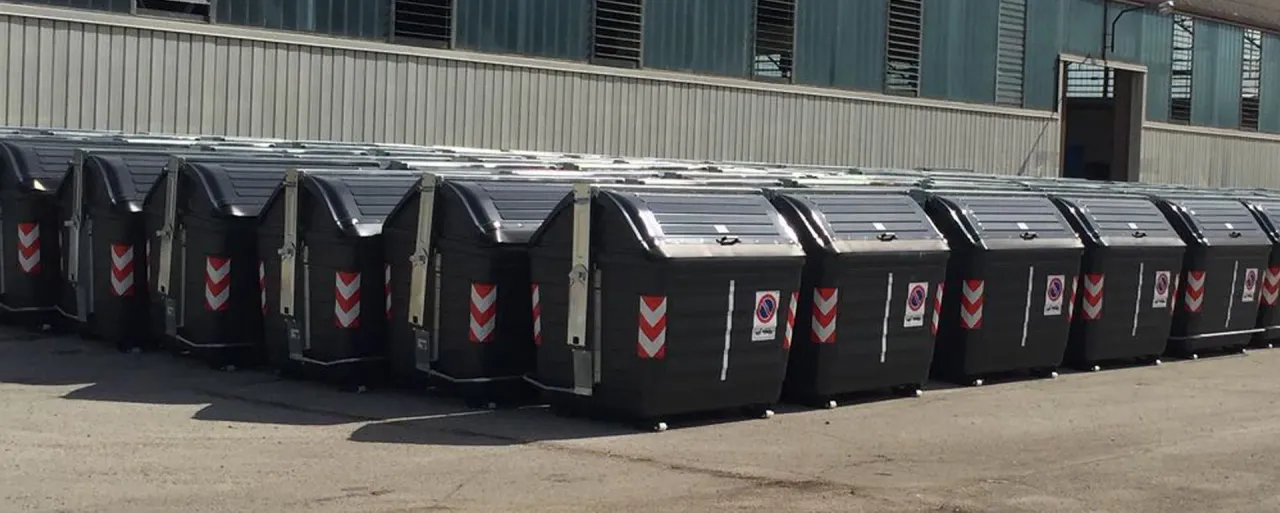
The activities relating to land management can be traced back to four complementary areas: urban hygiene, street furniture, professional mobility and digital monitoring.
Each responds to different needs, but they all contribute to the functioning of public services and urban spaces.
Waste collection requires an adequate supply of containers, vehicles and equipment for the type of service and the characteristics of the area.
The needs can change significantly between a densely populated urban centre, a residential neighbourhood, an industrial area and a tourist location.
The main solutions include:
The choice must take into account the materials to be collected, the volumes, the frequency of emptying, the methods of disposal and the means available for collection.
A container, for example, should not be selected solely based on its rated capacity. It is also necessary to check the emptying system, compatibility with vehicles, accessibility for users and available spaces.
Similarly, the choice of collection equipment must be linked to the operator's operating methods and the characteristics of the areas in which it will be used.
Bunder Company distributes solutions for waste collection and urban hygiene equipment, supporting institutions and operators in selecting products and defining the most suitable configurations.
Discover the solutions for urban hygiene
Street furniture contributes to the functionality, usability and quality of public spaces.
Squares, parks, pedestrian paths, green areas and meeting areas require elements designed for frequent use and for different environmental conditions.
The main categories include:
The design of street furniture must consider various factors.
Intended use:a seat intended for a public park may have different needs than that intended for a square or a pedestrian path.
Materials and durability:exposure to atmospheric agents, wear, vandalism and frequency of maintenance influence the choice of materials.
Accessibility and layout:the elements must be placed in a manner consistent with the routes and the usability of the spaces.
Architectural coherence:shapes, colors and finishes should respect the characteristics of the urban environment.
Maintenance:the availability of components, ease of cleaning and methods of replacement affect the overall cost during the useful life of the furniture.
A redevelopment project should therefore not be limited to the aesthetic choice of elements, but also consider their functionality over time.
A further aspect concerns the coordination between street furniture and urban hygiene. Bins, containers for separate waste collection and other disposal elements must also be designed based on the emptying methods and maintenance activities.
Bunder Company offers classic and contemporary urban furniture solutions, seats, bins and protection systems for public spaces, selecting the configurations according to the context and needs of the project.
Discover the urban furnishing solutions
Urban hygiene, maintenance and management of public spaces activities require frequent movements between intervention points.
Not every operation requires a truck or van. In certain situations, a compact vehicle may be more appropriate for transporting workers, tools and materials.
Professional electric tricycles are designed for this type of use.
Applications may include:
The compactness of the vehicle can facilitate movement in contexts with limited space, while the electric propulsion allows it to operate without exhaust emissions during use.
When choosing, it is necessary to carefully evaluate the actually permitted load capacity, the autonomy, the dimensions of the vehicle, the configuration of the compartment and the approval category.
The choice of setting is also important. An open platform, a body with sides or a closed compartment can respond to very different professional needs.
Bunder Company distributes electric work tricycles with different configurations, mainly intended for sweeping, micro-collection and operational transport activities.
Discover professional electric tricycles
The introduction of digital technologies represents an important evolution for the management of environmental equipment and services.
In a traditional system, the planning of emptying and interventions is generally organized through calendars, pre-established frequencies and information collected by the operators.
This method may be adequate in many contexts, but does not always allow precise knowledge of the actual conditions of the equipment and the filling levels of the containers.
IoT technologies allow you to add an information level to operational management.
Through sensors, connectivity and software platforms it is possible to collect data on the status of equipment, centralize it and use it to support decisions.
Filling sensors allow you to detect the level of waste inside containers and disposal points.
The devices can be installed on different types of equipment, depending on the structure of the container, the material collected and the environmental conditions.
The information can be transmitted to a monitoring platform, where it is associated with the container and its location.
In this way the manager can have information regarding:
The data on filling does not replace operational planning, but allows us to combine the pre-established frequencies with more up-to-date information on the conditions of the collection points.
The digital platform is the point where data from connected devices and equipment converge.
Through dashboards and consultation tools, authorized personnel can view container distribution, check available information and analyze recorded events.
An advanced platform can make available:
The usefulness of these tools depends on the quality of the data collected, the connectivity coverage, the correct installation of the devices and the ability of the manager to use the information in their processes.
One of the most important aspects in the digitalisation of environmental services concerns the possibility of connecting new technologies to systems already used by the manager.
An institution or company does not always start from scratch. It may already have management software, mapping systems, tour planning tools or platforms used by operators.
In these cases, introducing new technology without considering existing infrastructure risks creating additional siled tools.
It is therefore advisable to check the possibilities of integration in advance.
Depending on the characteristics of the platforms involved, connections can be made through:
Not all platforms necessarily support the same modes of communication. The feasibility of the integration must be verified by analyzing technical documentation, available protocols, permissions and data structure.
The true value of technology lies not in simply collecting data, but in the ability to use it to make better decisions.
A sensor that detects the filling level of a container generates information. A platform that relates that data to the geographical position, the history of contributions and the planned activities can transform it into an operational support tool.
For example, having up-to-date container information can help a manager:
It does not mean that every monitoring system automatically produces a reduction in costs or kilometers travelled.
The result depends on the characteristics of the service, the distribution of the collection points, the quality of the data and the ability to modify the operational organization based on the available information.
The three components respond to complementary needs.
The equipment represents the physical part of the service: containers, collection systems, vehicles and furnishings.
The vehicles allow operators to reach intervention points and move materials.
Digital technologies add information on the status of equipment and the progress of activities.
When these elements are selected without considering their relationships, the project risks being fragmented.
Let's think, for example, of a municipal service that involves the installation of new collection points, monitoring of containers and daily maintenance and cleaning interventions.
The design should simultaneously consider:
| Element | Need to be evaluated |
|---|---|
| Containers | Capacity, accessibility, materials and emptying system |
| Positioning | Territorial distribution, roads and access to vehicles |
| Operational vehicles | Dimensions, load, autonomy and type of intervention |
| Sensors | Compatibility with containers and detection methods |
| Digital platform | Map, data, notifications, reports and asset management |
| Integrations | Connection with software and systems already used |
| Assistance | Availability of technical support and anomaly management |
Integration doesn't necessarily mean using a single platform for every function or a single manufacturer for all equipment.
It means verifying that the different components are compatible and that they can contribute to the functioning of the service without introducing avoidable complexities.
Consider a collection point management project in an urban center.
The Municipality or the manager must organize the disposal of waste, keep the surrounding areas clean and schedule maintenance interventions.
A possible configuration could include:
Each component maintains its own function, but is selected considering the needs of the others.
This example describes a possible project scheme, not a project implemented by Bunder in a specific municipality.
The choice of supplier should start from the analysis of operational needs and not from consulting a catalogue.
A specialized partner must be able to understand the context, identify the necessary technical characteristics and evaluate different solutions available on the market.
There are some aspects that deserve particular attention.
The first element is the ability to understand how the product will be used.
To supply containers, it is necessary to know the type of collection, volumes, emptying methods and characteristics of the area.
For a vehicle it is necessary to analyze loads, distances, frequency of interventions and circulation conditions.
For an IoT system it is necessary to understand what information is needed, which devices must be connected and how the data will be used.
A distributor who collaborates with different manufacturers can compare solutions belonging to different ranges.
This allows you to evaluate the alternatives based on the technical characteristics, conditions of use, availability and overall cost.
The choice should not be limited to a single brand when there are more appropriate alternatives on the market for the specific need.
When a project includes multiple categories, it becomes important to coordinate configurations, documentation, timing and stakeholders.
The partner must be able to follow the different commercial and technical phases, clarifying which activities are managed directly and which through producers or other specialized partners.
The relationship should not end with the delivery of the product.
For professional equipment and vehicles it is important to be able to count on a reference for technical information, requests for assistance, spare parts and subsequent needs.
Even in the presence of digital technologies, it is necessary to be able to identify the contact person for the management of any anomalies and for support relating to the systems installed.
The most expensive product is not necessarily the most suitable.
An investment must be evaluated considering actually necessary performance, expected life, maintenance, availability of spare parts, management costs and operational benefits.
Proposing an oversized solution can increase the cost of the investment without generating a commensurate benefit.
A good partner should also be able to explain when a simpler configuration is sufficient to solve the problem.
Bunder Company has been operating in the sector of equipment and technologies for urban hygiene and street furniture for over twenty years.
The activity develops through the distribution of products made by specialized producers, selected according to the needs of municipalities, environmental managers, companies and professional operators.
For various product lines Bunder also operates through exclusive distribution relationships, making solutions developed by specialized partners available to the Italian market.
The company's role is not limited to the sale of individual items.
Bunder supports the customer in understanding the needs, identifying the available alternatives and building a proposal consistent with the service to be implemented.
The approach favors customer satisfaction and the resolution of operational critical issues. The solution is chosen based on what is really needed, without automatically considering the most expensive configuration as the best.
The work can be organized through five steps.
1. Needs analysis
Information is collected on the service, on the characteristics of the territory, on the products already present and on the critical issues to be addressed.
2. Identification of solutions
Based on needs, the most appropriate technologies and product categories are identified among those available through partner manufacturers.
3. Technical and commercial evaluation
Configurations, characteristics, customization possibilities and economic conditions are compared, taking into account the constraints of the project.
4. Coordination of supply and commissioning
Bunder coordinates the planned activities, the availability of the products and the relationship with the partners involved. Installation and commissioning can be followed directly or through specialized personnel, depending on the solution.
5. Follow-up support
After the supply, Bunder maintains the relationship with the customer and provides support and assistance for any needs that may arise.
A specific need of Municipalities and managers concerns the preparation of supplies and participation in purchasing procedures.
The choice of containers, equipment and vehicles must be consistent with the technical requirements of the specifications and with the conditions of the procedure.
Bunder can support organizations and operators in evaluating products, identifying solutions that meet specific requests and coordinating with partner manufacturers to prepare documentation and technical offers.
The support can also concern supplies consisting of multiple categories of equipment, when the procedure requires the coordination of different products and skills.
The methods of participation and contractual commitments are defined according to the individual procedure.
For Bunder, the relationship with the customer should not be limited to the single transaction.
A municipality or an environmental manager may have different needs over time: expand a supply of containers, introduce new disposal systems, update a fleet of vehicles or integrate monitoring tools.
Knowing the context and the supplies already present allows us to address these new needs with greater continuity.
The objective is to build a professional relationship in which the choice of products is guided by their actual usefulness and ability to respond to the needs of the service.
Bunder Company can represent an interlocutor for institutions, environmental managers and companies that are facing one or more of the following needs:
It is not necessary to have already identified the product to purchase.
The request can start from the description of an operational problem, a service to be organized or a project still in the evaluation phase.
Based on this information it is possible to identify relevant product categories and evaluate available alternatives.
Urban hygiene, street furniture, professional mobility and digital technologies are different areas, but closely linked to the daily management of the territory.
Their integration requires specific skills, product knowledge and the ability to coordinate different manufacturers and solutions.
Bunder Company supports municipalities, environmental managers and businesses on this very path: from understanding needs to selecting products, up to coordinating supplies and subsequent support.
The choice always starts from the operational context and the customer's needs.
Do you have a project to develop or a critical issue to resolve?
Describe your needs, even if you have not yet identified the technical solution. Bunder Company can help you evaluate available alternatives and identify products and technologies consistent with your service.
Bunder Company is a distributor specialized in products, equipment and technologies for urban hygiene, street furniture and professional electric mobility. It supports municipalities, environmental managers and companies in choosing solutions, coordinating producers and supplies according to operational needs.
Bunder Company operates primarily as a distributor of products made by specialty manufacturers. It also has exclusive distribution relationships for various commercial lines. His role includes product selection, technical-commercial consultancy, coordination of supplies and customer support.
Yes. Bunder deals with urban hygiene equipment, waste collection systems, street furniture and professional electric tricycles. It also offers monitoring solutions and digital technologies for managing connected equipment.
Yes. The solutions are aimed at Municipalities, environmental managers, urban hygiene companies, businesses and operators who manage services in the area. The proposal is defined according to the characteristics of the project and the needs of the client.
The offer includes containers for domestic, home and roadside collection, bells, underground and semi-buried containers, compactors, press containers, skips, loaders, cranes and other equipment for waste collection and handling.
Bunder offers seats, benches, waste bins, elements for separate waste collection, racks, planters and systems for protecting public spaces, including bollards, arches and barriers. The configurations are selected based on the urban context, materials and maintenance needs.
Yes. Bunder distributes electric work tricycles with different configurations, intended for sweeping, micro-collection, equipment transport, municipal services and urban logistics.
They are devices that detect the level of waste inside containers and disposal points. The data can be transmitted to a digital platform to monitor filling, receive notifications and support emptying planning.
Yes. Compatible sensors can be connected to digital platforms that centralize the data, allow visualization on a map and provide notifications, detection history and reports.
Yes, when the systems involved support compatible interchange methods. Integrations can use APIs, webhooks or other communication and synchronization systems, subject to verification of the technical documentation and features of existing platforms.
Bunder offers consultancy for purchasing procedures and tenders relating to containers, equipment and systems for urban hygiene. It can support the identification of products consistent with the specifications and coordination with partner manufacturers for technical offers and supplies.
It is possible to contact Bunder through the company website, indicating the project, the type of service to be organized and any operational critical issues. It is not necessary to have already identified the product: the comparison can start from the description of the need.
Guides and articles linked to this solution: operational context, design choices and useful references.
Smart bins, compaction and fill-level sensors: when smart collection pays off and how to assess data, routes and costs. Bunder Waste Technology guide.
How to draft specs for waste collection containers and equipment: requirements, CAM, technical details and equivalence. Bunder guide for authorities.
CAM for street furniture: materials, durability and documentation before buying litter bins, benches and bollards. Bunder Urban guide for authorities.