tricicli-elettrici
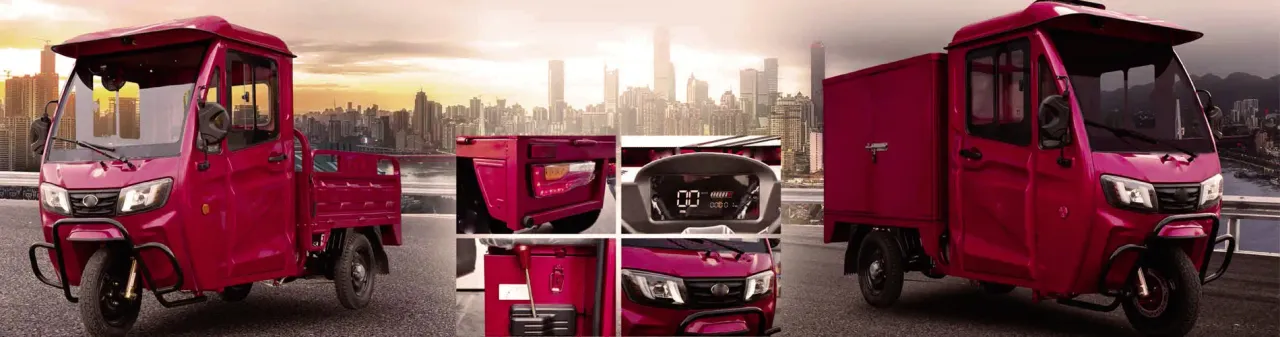
We support urban services with electric cargo tricycles for micro-collection, green maintenance and deliveries in LTZs and historic centres.
Discover more

Guides and resources
Electric work tricycles for sweeping, micro-collection and urban tasks: range, payload, bodywork and configuration. Bunder Mobility guide for municipal services.
An electric work tricycle can be very effective when the challenge is not moving large waste volumes but reaching points that a conventional vehicle struggles to serve quickly.
Historic centres, alleys, pedestrian areas, internal routes, squares, seafronts, markets and zones with restricted access are contexts where a compact vehicle can play a precise role: bring the operator and tools close to the intervention point, collect small quantities and move them to a drop-off point or a higher-capacity vehicle.
An electric tricycle does not automatically replace a refuse compactor or sweeper. In many services it makes more sense as a complementary fleet element, designed to cover the part of the territory where size, noise, manoeuvrability or accessibility make a traditional vehicle inefficient.
Use of these vehicles in urban hygiene services is documented in several settings. LIPASAM, Seville’s municipal cleaning company, had 248 electric tricycles in 2023 and had contracted specific preventive and corrective maintenance for the fleet. In Italy, operators such as Monteco declare use of pedal-assist electric tricycles among equipment for street cleaning and waste management services.
The most interesting field is activities with short movements, many intervention points and spaces hard to serve with larger vehicles.
A manual sweeping operator, for example, must carry bags, brooms, shovels, containers and other tools. If the shift start point is some distance from the assigned area, part of the time is absorbed simply by travel.
A compact vehicle brings equipment directly on site and moves between operational zones.
The same principle applies to micro-collection: small quantities are collected locally and later transferred to a higher-capacity vehicle or collection point.
A technical report on street cleaning for the Municipality of Marcianise, for example, envisages teams with pedal-assist electric tricycles within manual sweeping of the territory. The Municipality of Fidenza also envisaged the electric tricycle as a possible alternative to the electric porter for part of manual sweeping in the monumental zone.
That is probably the correct way to read the vehicle: not as a “small electric truck” but as a compact operational vehicle within a specific service organisation.
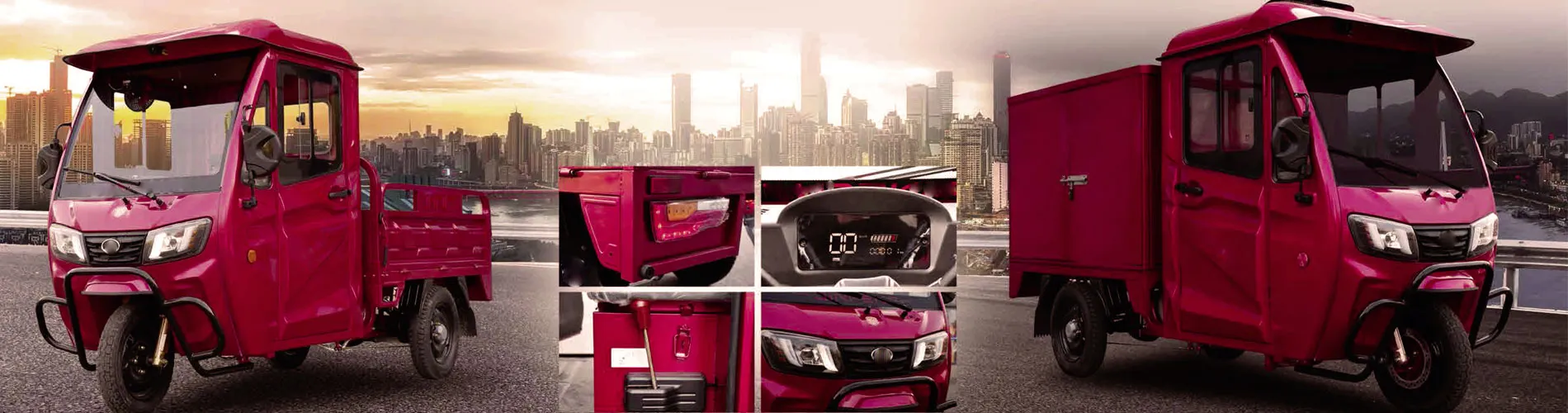
For manual sweeping the tricycle can simultaneously act as transfer vehicle and operational support.
Configuration may include a platform or load bay for materials and tools, or a specific setup for collecting small waste.
The decisive element is the relationship between vehicle and operator.
A vehicle that is too small can reduce logistic advantage by forcing part of the equipment to stay at the depot or requiring frequent returns. An oversized vehicle loses the compactness that justifies its use.
Before choosing the model, reconstruct a typical day:
depot → intervention area → collection points → possible waste transfer → return or continuation of shift.
If the route has many close points and frequent direction changes, manoeuvrability may matter more than maximum load capacity.
Micro-collection is one of the most interesting uses, especially in territories with historic centres.
Imagine a municipality where the main collection vehicle cannot easily enter some very narrow streets. Using the same smaller vehicle in those streets may seem a solution, but it is not necessarily the most efficient choice.
An alternative configuration can be organised on two levels:
In this scheme the tricycle links the collection point to the main logistics network.
Convenience depends on service design. If transfer requires too many trips or too many manual handlings, the advantage of compactness can shrink quickly.
Dimensioning must consider not only vehicle capacity but how often it must be emptied during the shift and where drop-off occurs.
Here the difference from a traditional vehicle becomes most visible.
A historic centre may simultaneously have:
A machine designed for a standard urban road can become impractical in such an environment.
The tricycle reduces operational footprint and brings the operator closer to the intervention point. That advantage must not be confused with general permission to circulate everywhere.
Access to low-emission zones, pedestrian areas, cycle paths or pavements depends on the legal category of the vehicle and local rules. It should never be inferred simply because the vehicle is electric or has three wheels.
The commercial label “electric tricycle” covers vehicles that are technically and legally very different.
This distinction matters especially for a municipality or operator that wants to use the vehicle on the road.
European Regulation 168/2013 excludes from its scope pedal cycles with auxiliary electric motor with continuous rated power not exceeding 250 W, assistance stopping when pedalling stops and in any case reduced until it stops before 25 km/h. The same regulation provides specific classification for category L vehicles and powered tricycles.
This means a pedal-assist tricycle meeting applicable requirements is not automatically treated like a motorised tricyclable for road registration, and vice versa.
Before purchase verify:
Verification must be done on the model and configuration actually purchased.
A pedal-assist tricycle is especially interesting when the service requires high agility and moderate speeds.
A motorised electric work tricycle can instead be conceived as a true goods transport vehicle, with platform or box, higher payload and different characteristics.
They are tools that may look similar at first glance but answer different operational needs.
The first question to the supplier should not be “how many kilometres does it do?” but:
which vehicle category does the model fall under and for which use is it homologated or intended?
Only after that does comparing range, capacity and bodywork make sense.
For urban hygiene the base vehicle is only the starting point.
Useful configuration depends on the service.
For sweeping, dedicated space for brooms, shovels, bags and consumables may help. For micro-collection a platform or bay to manage containers and collected waste may be preferable. For urban maintenance or support activities completely different setups may be needed.
Payload must be assessed against the complete configuration.
A figure declared by the manufacturer should not be read in isolation: verify how available load and vehicle behaviour change after installing box, tub, shelving, tools or other accessories.
The same logic applies to range.
Declared range under standard conditions does not necessarily match distance actually covered during a shift with load, frequent stops, restarts, gradients and uneven surfaces.
For urban hygiene service it is more useful to estimate energy need for the operational day than to use declared range as the only selection criterion.
In a historic centre maximum speed is often insignificant.
The vehicle may cover few kilometres in an entire shift but perform dozens or hundreds of manoeuvres.
In this scenario the following become more relevant:
The CargoJP range offered by Bunder includes three configurations, CargoJP-p, CargoJP-o and CargoJP-b, with different platform or load bay setups. Bunder’s vertical site also presents them for urban hygiene, micro-collection, goods transport and last-mile activities.
Choice among configurations should follow the work the vehicle will do, not motor power alone.
In operational transport payload matters more than nominal volumetric capacity.
A large box may look attractive, but if transported material quickly reaches the authorised mass limit, available space cannot be fully used.
For waste collection remember material can have very different density.
Paper, light packaging, street bin waste, green waste and other materials occupy different volumes for the same weight.
Configuration should be dimensioned from:
material type + average shift volume + emptying frequency + mass limit.
That is the operational data that shows whether a tricycle is really suited to the planned micro-collection.
Adding electric tricycles to a fleet also implies a small charging infrastructure.
Before supply verify:
This matters especially when the service runs multiple shifts.
A tricycle available for the first shift but not ready for the next because charging was undersized does not solve the operational problem it was bought for.
Even a compact vehicle needs maintenance.
LIPASAM’s experience is indicative: Seville’s municipal company contracted specific preventive and corrective maintenance for its electric tricycles, underlining the need to keep high availability of vehicles used for urban cleaning.
For a professional fleet verify before purchase:
Maintenance cost should not be assessed only as an economic line. For an operator it is also a question of vehicle availability.
This point is often overlooked.
Buying an electric tricycle and assigning it to an operator does not automatically make the service more efficient.
The benefit appears when the vehicle concretely changes how work is organised.
A simple example: if the operator keeps returning frequently to the depot to empty the vehicle, recover materials or recharge the battery, much of the compact mobility benefit is lost.
Conversely, sound organisation may provide:
departure with full equipment → operational route → progressive collection → intermediate drop-off → continuation → return.
Service design must therefore come before model choice.
There are situations where greater capacity of a traditional vehicle remains necessary.
If volume collected during the shift is high, if distances are long, if the service needs strong transport capacity or if few emptyings with large loads are required, a tricycle can become inefficient.
The same applies when the territory has no real accessibility problems.
Using a very compact vehicle on a wide, easily passable road network can add an intermediate step without proportional benefit.
The right question is therefore:
which part of the service should the tricycle cover?
If the answer is clear, defining capacity, range, bodywork and number of vehicles becomes much simpler.
For a company running a contract, a mixed configuration may be more rational than fully replacing traditional vehicles.
A possible operational scheme:
higher-capacity vehicles for main collection and transport;
electric tricycles for historic centre, micro-collection, manual sweeping and hard-to-reach points;
support vehicles for maintenance, transfers and extraordinary activities.
Fleet composition must derive from the specification, routes and actual service volumes.
The new waste-management CAM, adopted with Decree 7 April 2025 and in force from 18 June 2025, covers municipal waste collection and transport, street cleaning and sweeping and supply of related vehicles, plus leasing, hire and rental of vehicles and equipment within the decree scope.
For a public procedure you must verify the specification and environmental requirements applicable to the specific supply or service, without assuming every electric tricycle automatically has the same regulatory treatment as vehicles in other categories.
A professional quotation request should state at least the type of service to be performed.
“Request for electric tricycle” is not enough.
It is much more useful to specify:
With this data comparison between models becomes much more concrete.
Bunder presents its electric work tricycle range as part of urban hygiene solutions and gathers CargoJP-p, CargoJP-o and CargoJP-b through the CargoJP vertical site, as well as using its commercial structure for configurations and quotation requests.
Before ordering, a municipality or operator should verify five elements in sequence:
1. Is the vehicle legally usable in the planned context?
Category, homologation, documentation and circulation rules.
2. Does capacity match the real shift?
Load, volume, emptying frequency and routes.
3. Is range sufficient for actual service?
Not isolated theoretical range but range compatible with load, gradients, stops and shift pattern.
4. Does the bodywork really facilitate the operator’s work?
Tools, collection, unloading, visibility and access.
5. How is the vehicle managed when it stops?
Spare parts, support, batteries and recovery times.
Answers to these five questions show whether the tricycle is a useful fleet element or simply an attractive vehicle on paper.
The value of an electric tricycle appears especially when part of the territory needs a different vehicle from the main one.
For manual sweeping it can reduce unproductive operator travel. For micro-collection it can link hard-to-reach areas to the main collection network. For urban tasks and maintenance it can move materials without using an unnecessarily large vehicle.
Bunder offers the CargoJP range for professional transport and applications linked to urban hygiene, alongside other equipment for collection and urban services.
The right choice still starts from the service: route, load, frequency, accessibility, emptying method and work organisation. Only after these elements does comparing models and defining bodywork make sense.
It can be used for manual sweeping, micro-collection, transport of tools and small quantities of waste and urban activities in areas where a traditional vehicle is impractical.
Normally no. The two types have very different functions. The tricycle suits local movements and small loads; the compactor is designed for much larger collection and transport volumes.
It can be when narrow streets, alleys, restricted access or high pedestrian density make traditional vehicles difficult. Actual possibility of circulating in low-emission zones or pedestrian areas depends on vehicle category and local regulation.
Pedal assist falls under a specific technical regime, with requirements also defined in European Regulation 168/2013. A motorised electric tricycle may fall under motor vehicle categories and require different homologation and circulation requirements.
Declared range must be compared with real route, load, gradients, stops, restarts, battery condition and planned work cycle.
A charging method compatible with the model and service organisation is necessary. With multiple vehicles or shifts you must also verify electrical availability and charging times.
It depends on the activity. Sweeping may need space for tools and materials; micro-collection may need a platform, box or specific collection system.
Yes. Bunder’s electric work vehicle range includes CargoJP-p, CargoJP-o and CargoJP-b, also presented for urban hygiene, micro-collection and professional transport applications.
Bunder product pages and solutions linked to what this article covers.
We support urban services with electric cargo tricycles for micro-collection, green maintenance and deliveries in LTZs and historic centres.
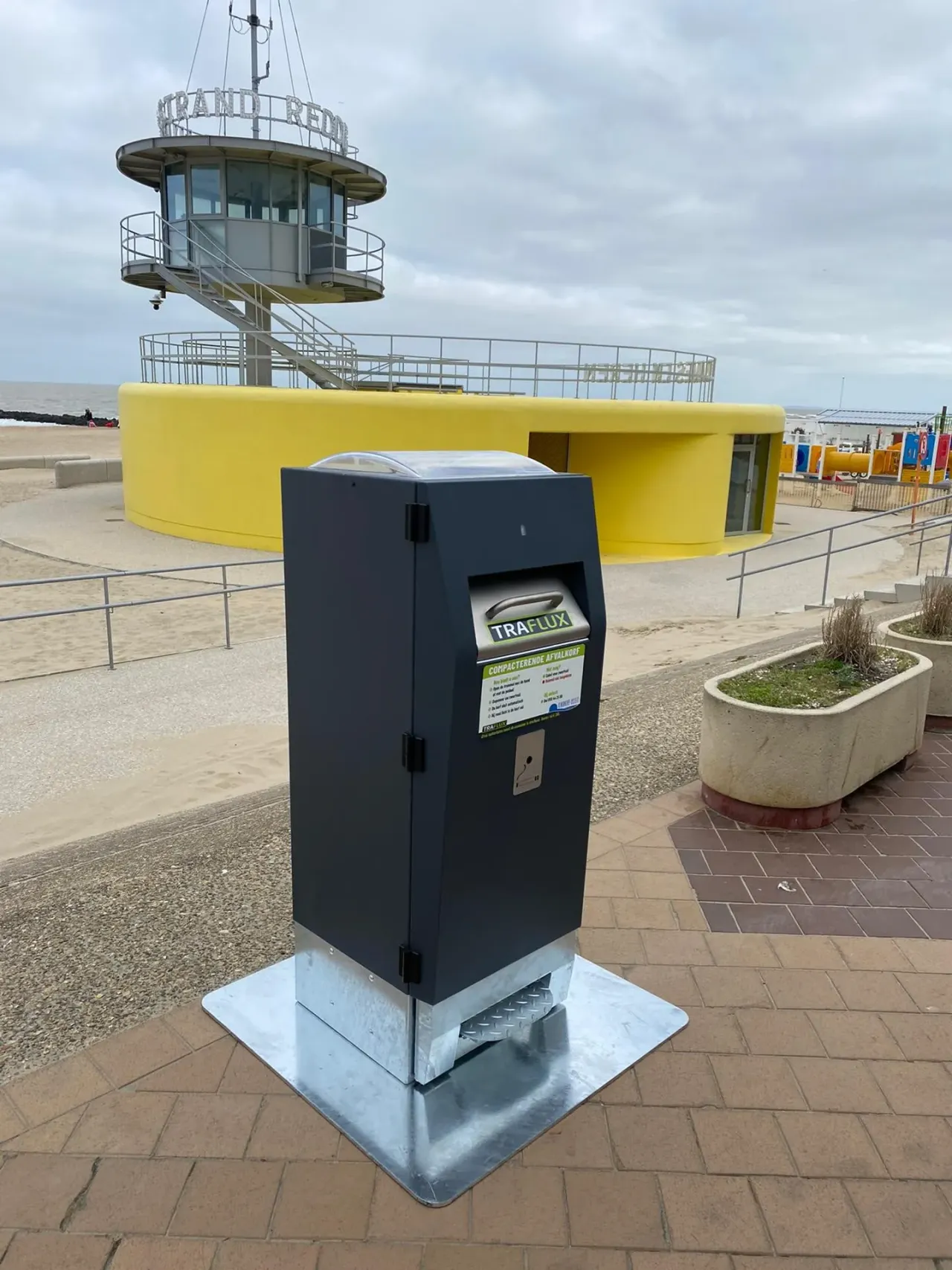
We install solar-powered compacting bins and connect them to cloud-based remote monitoring.
Guides and articles linked to this solution: operational context, design choices and useful references.

Smart bins, compaction and fill-level sensors: when smart collection pays off and how to assess data, routes and costs. Bunder Waste Technology guide.
Buying or renting waste collection equipment: comparing TCO, maintenance, service life, downtime and operational requirements. Bunder guide to the decision.

CAM for street furniture: materials, durability and documentation before buying litter bins, benches and bollards. Bunder Urban guide for authorities.