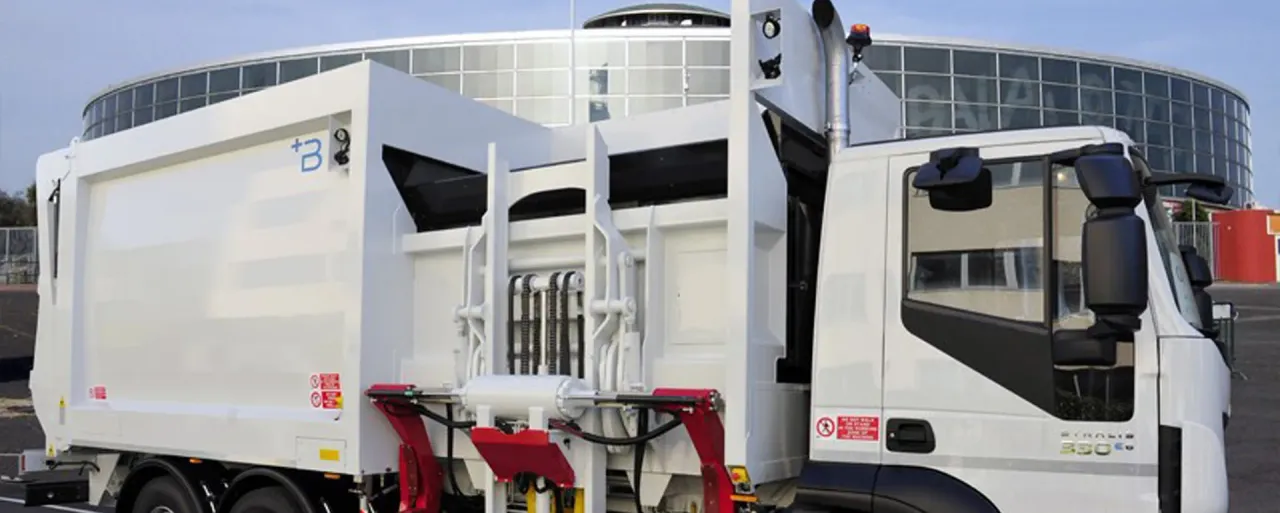
Refuse compactors
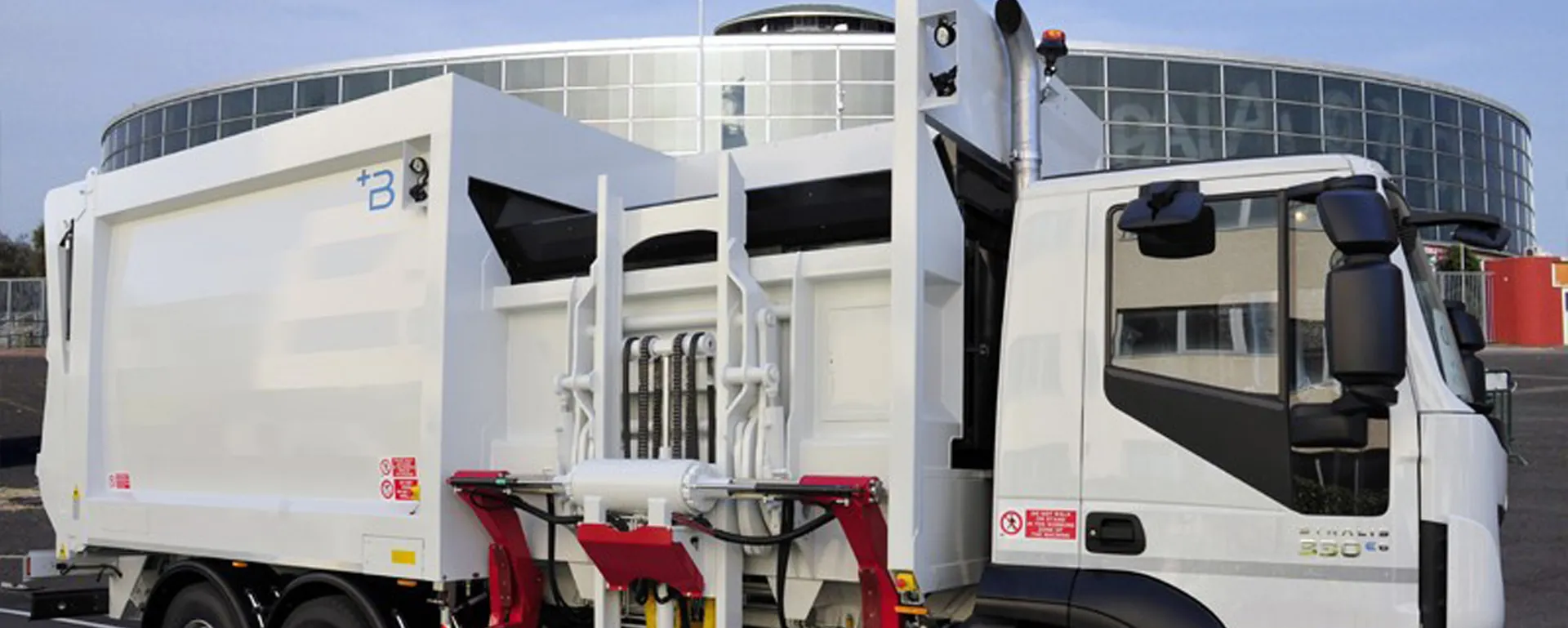
We configure side- or rear-loading refuse compactors on truck chassis, including multi-axle, for every waste type.
Discover more
Guides and resources
Buying or renting waste collection equipment: comparing TCO, maintenance, service life, downtime and operational requirements. Bunder guide to the decision.
Buying a refuse compactor, hook-lift system, press container or other waste collection equipment means taking on the investment and lifecycle management directly. Renting turns acquisition into a contractual relationship, with terms, duration, fee and services that depend on the formula chosen.
For a waste operator or company setting up a new service, the difference is not exhausted by comparing purchase price with monthly rental.
The choice should consider at least expected duration of use, intensity of equipment utilisation, capital availability, maintenance, downtime risk, residual value and the need to replace the asset at end of service.
Public authorities also use rental for waste collection vehicles. In 2026, for example, Servizi Ambientali per il Nord Barese published a framework agreement for full-service rental without driver of special vehicles for municipal waste collection and transport. The example confirms rental is used in the sector; it does not mean rental is automatically preferable to purchase.
With purchase, the company or body acquires availability of the asset as an investment. The vehicle or equipment enters internal management and, depending on contractual and accounting treatment, the owner bears costs linked to maintenance, repairs, insurance and eventual disposal.
With rental the user pays for availability of the asset for a defined period. Conditions vary widely: the fee may cover only the asset or include additional services.
Two offers with the same monthly fee can therefore have very different economic content.
Before comparing them you must read what is actually included.
A frequent situation concerns a company winning a new collection contract.
Suppose the service has a defined duration and the fleet must be adapted quickly. The operator must evaluate not only which equipment to buy but also how long it can actually use it within that contract.
Purchase may leave more freedom after the contract ends because the asset remains with the company. Rental may align with a time-bound need, especially when the operator does not want the risk of reallocating vehicles designed for a specific service.
The point is not a fixed duration beyond which rental automatically becomes uneconomic. Compare contract duration with expected equipment lifecycle and future use.
To compare purchase and rental correctly, total cost of ownership (TCO) is useful: the full cost of managing the asset over the period considered.
For waste collection equipment, the calculation may include:
| Item | Purchase | Rental |
|---|---|---|
| Initial outlay | Significant | Generally lower |
| Availability of asset | Ownership | Contract duration |
| Maintenance | User responsibility per contract and organisation | Depends on formula |
| Repairs | Assessed directly | Depends on contract |
| Downtime | Risk mainly on user | Depends on SLA and contract |
| Residual value | Relevant for final assessment | Normally not retained by user as owner |
| End-of-cycle replacement | To be organised | Depends on formula |
| Capital tied up | Yes | Lower than direct purchase |
| Customisation | Potentially high within technical limits | Verify before signing |
TCO principles are also used in public procurement methodologies: the European Commission published 2026 guidelines on identifying and analysing cost elements during the procurement cycle, with models for TCO and life cycle costing.
For collection equipment, TCO must be built on the real operational profile, not theoretical values.
A compactor off the road is not just unavailable equipment.
For an operator it can mean reorganising shifts, using a substitute vehicle, changing routes or incurring extra costs to maintain service.
When comparing purchase and rental, maintenance must be analysed together with vehicle availability conditions.
For a rental contract verify precisely:
The label “full service” should not alone be read as any service guarantee. Contract and specification determine what is actually provided.
The same elements must be assessed for purchase. A lower initial price can quickly lose appeal if equipment needs frequent maintenance or inefficient spare parts management.
The same machine can have very different economic profiles depending on utilisation intensity.
A compactor working daily on multiple shifts has different needs from equipment used as reserve or for seasonal service.
The comparison should start from operational data such as:
These data also help avoid a common mistake: choosing the contractual formula before defining the actual utilisation profile.
Purchase deserves deeper analysis when equipment is expected to remain operational for a long period and the organisation has reasonable visibility on future use.
It can be particularly interesting when the company:
Residual value becomes an important variable.
Buying means also considering what happens at replacement: sale of used asset, trade-in, internal reuse or disposal.
TCO should account for estimated residual value, not only initial price and running costs.
Rental can become interesting when the need is time-bound or when the organisation wants to reduce initial investment and transfer part of asset management to the contract.
Some recurring cases:
Start of a new contract.
The company must adapt the fleet quickly without buying a large number of vehicles before verifying service evolution.
Temporary peak in activity.
A specific need requires extra capacity for a limited period.
Substitute vehicle.
Equipment must be temporarily unavailable and service cannot stop.
Service with defined duration.
The user foresees need linked to a specific contract period.
Need to preserve liquidity.
The organisation prefers not to commit a significant share of resources to immediate equipment purchase.
None of these automatically determines rental convenience. They are conditions that make the comparison particularly sensitive to contract structure.
“Rental” covers different operational formulas.
A short contract may serve temporary or substitute needs. A multi-year contract requires more structured assessment of fee, maintenance, mileage or use, return and end-of-contract conditions.
For a tender or commercial negotiation ask explicitly:
What am I paying for with the fee?
Purchase and rental should be compared on the same basis.
If purchase cost includes maintenance, tyres, insurance, support and residual value, corresponding items must be treated in the rental economic model according to what the contract provides.
Do not choose the formula first and only then the vehicle.
Sound assessment starts from the equipment needed.
Bunder offers collection and transport solutions including side- and rear-loading refuse compactors, hook-lift plants and compactors, containers, loaders, cranes, stationary presses and other urban hygiene equipment.
Configuration must align with service: collection type, volumes, emptying frequency, road layout, accessibility of drop-off points, territory characteristics and shift organisation.
For example, if an operator must work in a historic centre with narrow streets, the economic comparison between two contractual formulas has no value if one of the assets considered is unsuited to operating conditions.
The financial formula comes after technical verification.
Logic also changes by equipment type.
For press containers, hook-lift compactors and skips, flexibility of the fleet may matter particularly.
Through its urban hygiene range Bunder offers hook-lift plants, hook-lift compactors, hook-lift containers, multi-hook systems, loader cranes and stationary presses.
It is useful to assess how often equipment will be moved, whether it can be reused at other sites, which materials it must handle and how tightly configuration is linked to a specific plant or logistics flow.
Easily reallocated equipment may have different operational value from a solution designed for a single setup.
In the public sector the comparison must fit the acquisition procedure.
For services and supplies linked to municipal waste management, applicable CAM must also be considered. Decree 7 April 2025 covers municipal waste collection and transport, street cleaning and sweeping and supply of related vehicles, containers and bags.
Purchase versus rental should not be assessed in isolation from the specification.
Verify subject of the procedure, technical specifications, applicable environmental requirements, maintenance and support conditions and how the contracting authority will verify supply compliance.
A technical requirement necessary for service must remain even when the way the asset is made available changes.
Before requesting a final offer, prepare a sheet with the same scope for both alternatives.
| Parameter | Question to ask |
|---|---|
| Duration | For how many years or months will we use the equipment? |
| Utilisation | How many hours, shifts or kilometres do we expect? |
| Configuration | Which equipment does the service really need? |
| Investment | What is the total initial outlay? |
| Fee | What is the actual fee and what does it include? |
| Maintenance | Who performs it and what is included? |
| Downtime | How is unavailability managed? |
| Spare parts | Lead times and availability conditions? |
| Customisation | Can the bodywork be modified? |
| End of relationship | Return, renewal, replacement or other? |
| Residual value | What may the asset be worth at end of cycle? |
| TCO | What is total cost over the period considered? |
This structure reduces the risk of comparing a “bare” purchase price with a fee that already includes many services, or vice versa.
For anyone acquiring waste collection equipment, the more useful question is:
how much does this solution cost to deliver the planned service for the entire period I will use it?
From there comes the correct purchase versus rental comparison.
For purchase consider investment, maintenance, downtime, operating costs, residual value and disposal.
For rental consider fees, any initial costs, included and excluded services, contract limits, breakdown management and return conditions.
Only after aligning these variables does comparing the two scenarios make sense.
A sound process can be summarised in four steps.
1. Define the service.
Volumes, routes, shifts, contract duration, waste type and collection mode.
2. Define the equipment.
Payload, capacity, loading system, configuration, compatibility with service and territory.
3. Build two economic scenarios.
Purchase and rental should be assessed using the same period and operating conditions.
4. Verify operational risk.
Maintenance, downtime, replacement times, spare parts availability and end-of-contract management.
Bunder lists rental of equipment and vehicles among its services and offers a range for public authorities, waste operators and companies. The proposal can be assessed starting from operational need, not only the choice between a purchase list and a rental fee.
For a company that must guarantee collection service, equipment is an operational tool. Its convenience depends not only on acquisition price.
A vehicle used intensively for many years may need different assessment from equipment needed for a limited period. A new contract raises different considerations from renewing an established fleet. Standard equipment that is easily reallocated presents different risk from bodywork strongly tied to a specific service.
The right choice comes from crossing technical configuration, duration, use, TCO and operational risk.
Bunder can support this assessment starting from service needs and comparing available solutions for collection and transport, including purchase and rental formulas envisaged for the project.
There is no answer valid for all services. The comparison must include duration of use, work intensity, maintenance, downtime, contract costs and equipment residual value.
No. Included maintenance depends on the formula and contract conditions. An offer should clearly state included interventions, exclusions, breakdown handling and conditions for any substitute vehicles.
It can be an option to assess when service duration is defined, when the fleet must be adapted quickly or when the company wants to limit initial investment. Convenience must be verified on the single contract.
Use the same analysis period and compare total cost. Beyond price or fee, consider maintenance, downtime, operating costs, included services and residual value.
Not directly. A correct comparison must consider all economic components of both alternatives over the same period of use.
Contractual form should not be analysed separately from the subject of the procedure. For supplies and services within waste-management CAM scope, verify applicable requirements and how they are incorporated in tender documents. The current reference is Decree 7 April 2025.
Yes, organisationally a mixed fleet can be assessed. For example some vehicles purchased for continuous use and others rented for temporary or peak needs. Verify management, support, standardisation and total costs.
The Bunder range includes compactors, hook-lift systems and compactors, containers, presses, loaders and cranes, plus other urban hygiene and waste collection solutions.
Bunder product pages and solutions linked to what this article covers.
We configure side- or rear-loading refuse compactors on truck chassis, including multi-axle, for every waste type.
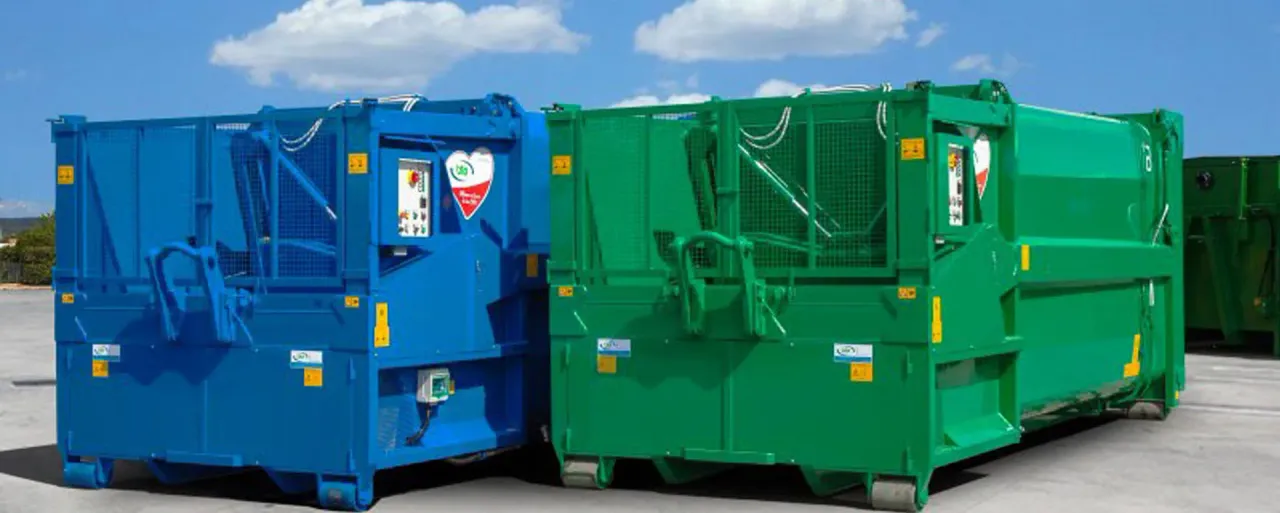
We supply press containers, stationary presses, hook-lift systems and skips for collection and material handling.
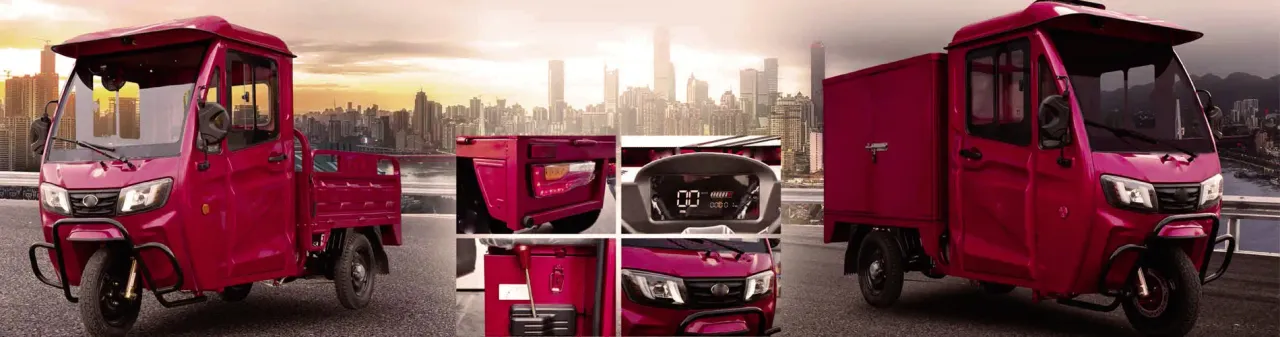
We support urban services with electric cargo tricycles for micro-collection, green maintenance and deliveries in LTZs and historic centres.
Guides and articles linked to this solution: operational context, design choices and useful references.
Comparing side-loading and rear-loading refuse compactors: bins, crew, road layout, fleet and service organisation. Bunder guide to choosing a system.
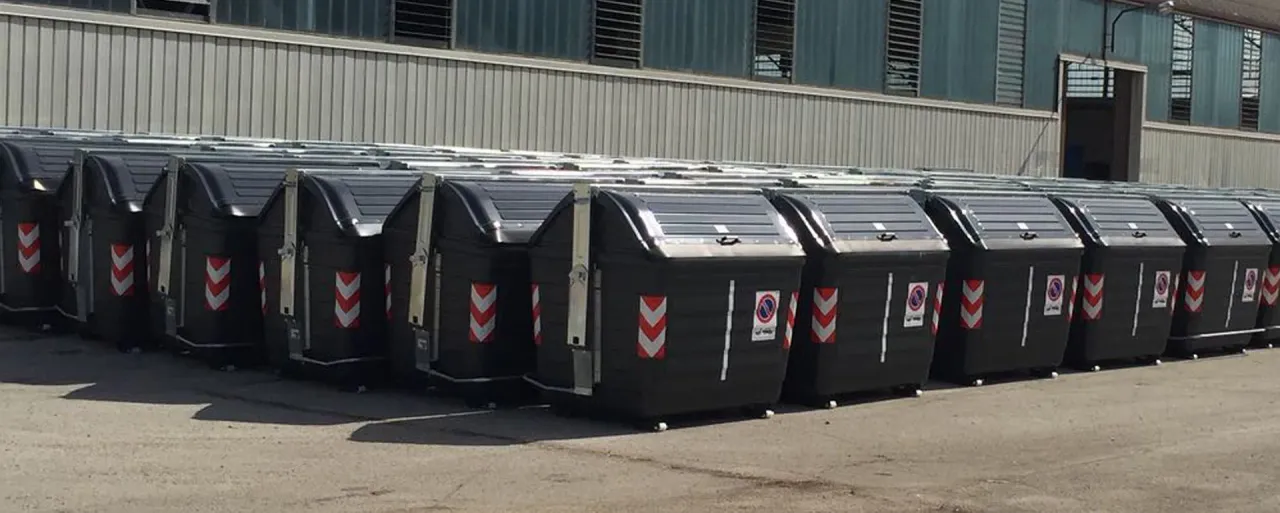
How to draft specs for waste collection containers and equipment: requirements, CAM, technical details and equivalence. Bunder guide for authorities.
Press containers, hook-lift compactors or conventional skips: how to choose by material, volumes, compaction and logistics. Bunder analysis for depots and services.