
bunder-waste-collection
Discover more

Guides and resources
How to draft specs for waste collection containers and equipment: requirements, CAM, technical details and equivalence. Bunder guide for authorities.
A good technical specification should not limit itself to describing a bin, refuse compactor or piece of equipment to buy.
It must translate into verifiable requirements what the service must be able to do.
For a contracting authority this means starting from operational needs, defining required performance, setting minimum technical requirements, stating how they will be demonstrated and allowing equivalent solutions where regulation requires it.
In urban hygiene a supply can simultaneously involve containers, vehicles, emptying systems, equipment, electronic components and support services. A poorly drafted specification can unnecessarily restrict competition or, conversely, be too generic for serious technical comparison.
The current reference framework includes Legislative Decree 36/2023, provisions on technical specifications and the equivalence principle, and for affected contracts the waste-management CAM adopted with Decree 7 April 2025. The new CAM decree entered into force 60 days after publication on 19 April 2025 and repealed the previous Decree of 23 June 2022.
The specification must make clear what must be supplied and with which minimum characteristics it must function.
It should not be a catalogue sheet copied from a brochure.
For example, writing:
“supply of refuse compactor for waste collection”
says very little.
A useful specification should clarify at least:
The specification must therefore turn the authority’s need into objectively verifiable characteristics.
This principle is particularly important under the new Public Contracts Code: Article 79 refers to Annex II.5 for definition of technical specifications. ANAC has repeatedly recalled the equivalence principle and the need for technical prescriptions not to introduce unjustified restrictions on competition.
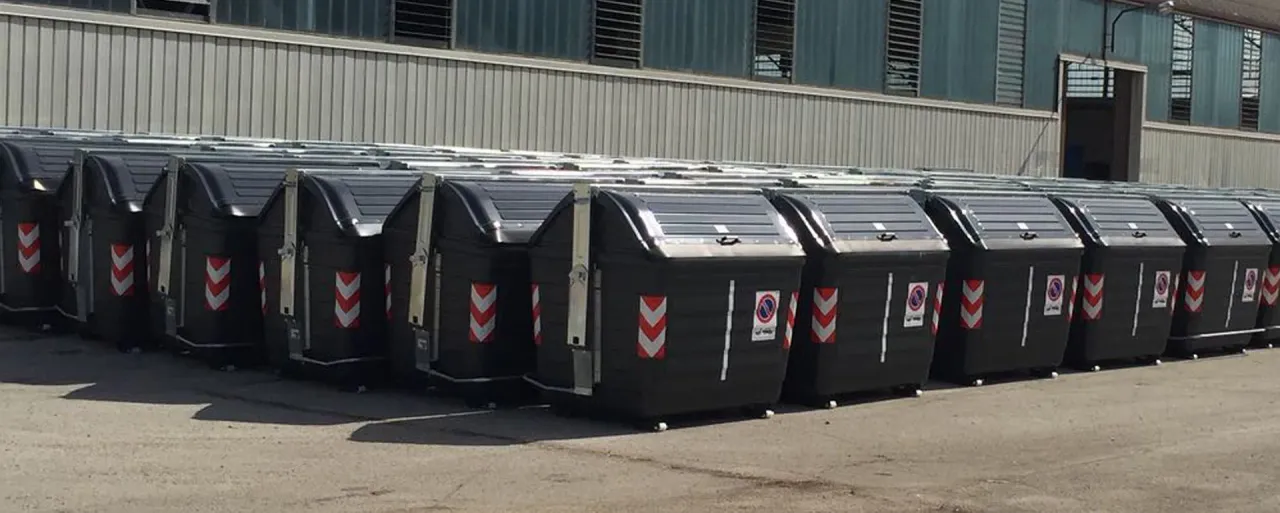
One of the most frequent mistakes is drafting starting from the product.
First define the problem the authority wants to solve.
For a container supply, for example, it helps to know:
For refuse compactor supply add, among other elements:
The specification should follow this analysis, not replace it.
A well-built specification can be organised in distinct sections.
A typical structure can include:
Describe precisely what is being purchased.
Example:
“Supply of bins for street separate collection fractions on the municipal territory.”
Better still when the subject identifies quantities, lots, types and intended use.
Explain where and how equipment will be used.
This gives meaning to subsequent technical characteristics.
State what the product must necessarily have.
Separate construction characteristics from performance the system must guarantee.
Define elements required for complete configuration.
State which documents must be submitted to demonstrate compliance.
Define how supply will be checked.
When foreseen by contract, regulate spares, support, times and intervention modes.
Exact structure must still be adapted to procedure and contract type.
The most delicate point is probably requirement wording.
A specification should describe the function the authority must obtain.
Rather than building the specification around a particular market solution, identify:
ANAC has reaffirmed on several occasions the relevance of the equivalence principle for supplies and correct formulation of technical specifications. In a 2024 opinion it observed that use of technical specifications is not in itself an obstacle to participation when correctly formulated and equivalence of solutions is guaranteed.
This is particularly important in waste equipment, where different manufacturers can achieve the same result through different build configurations.
An overly detailed specification is not necessarily a better one.
Risk appears when stated characteristics are not really necessary for service and happen to match one specific product.
Ask whether it is really necessary to prescribe:
ANAC has addressed cases where compliance of offers with minimum technical characteristics and the equivalence principle become decisive in offer verification.
The goal is not to make the specification generic.
It is to make specific and justified the characteristics that are really needed.
Dimensions are often necessary.
A bin must fit a platform.
A compactor must respect certain size limits.
Equipment must be compatible with an existing technical space.
A platform must fit a precise configuration.
Here dimension has functional justification.
Problem arises when dimension is given with unnecessary precision.
If the project requires equipment to occupy at most a defined area, the specification should start from that constraint, not from the drawing of an already chosen model.
Correct wording can be:
“Maximum footprint compatible with installation area defined in project documents.”
and only then set necessary numerical limits.
“Supply of 2,400 litre bins” can be appropriate if capacity comes from service design.
But the specification should know why it was chosen.
Capacity can depend on:
The Bunder range, for example, includes different container and underground configurations, with different capacities and emptying modes linked to collection vehicles.
This illustrates why the specification should not be written as a simple catalogue line.
When specifying material, link it to function.
For a street container relevant aspects can include:
For a compactor relevant aspects can include:
The specification should indicate characteristics needed for product life and operation, avoiding purely descriptive prescriptions without relation to service.
Regulatory compliance is necessary, but a generic statement does not replace identifying requirements to be verified.
For equipment with moving parts, the specification may need to address:
Which prescriptions to include depends on machine and contract.
The goal is for tender documentation to allow verification of the product actually supplied.
This step is often underestimated.
It is not enough to write:
“The container must be resistant.”
You must be able to verify what “resistant” means in the supply context.
The same applies to:
“The machine must be high performance.”
Such wording is too generic.
Better indicate the verifiable parameter where pertinent:
nominal capacity;
payload;
size;
operating cycle;
noise level;
range;
compatibility;
resistance;
certification or planned test report.
The specification should therefore associate where necessary:
requirement → parameter → document or test → verification method.
This structure also simplifies acceptance.
Effective wording can be built in four parts.
What the product must have.
How much it must have.
Why.
How it must be demonstrated.
Conceptual example:
“The container shall have nominal capacity of at least X litres, compatible with the planned emptying system, and shall be accompanied by technical documentation necessary to verify compliance.”
Concrete wording must be adapted to procedure and verified by the competent officer.
This distinction is essential.
A minimum requirement states what all admissible products must have.
An award criterion distinguishes offers beyond minimum where the award method provides for it.
Article 108 of the Public Contracts Code governs award criteria and requires tender documents to identify criteria pertinent to subject and contract characteristics; for best price-quality ratio, criteria must allow effective competitive comparison on technical profiles.
For example:
Minimum requirement
Capacity not less than 3,000 litres.
Merit criterion
Greater useful capacity, within dimensional and functional limits set by the project.
The distinction avoids a tender where characteristics presented as “merit” are actually indispensable, or minimum requirements improperly turned into scoring elements.
For a complex supply a matrix can help.
| Area | Requirement | Type | Verification |
|---|---|---|---|
| Capacity | Minimum nominal capacity | Requirement | Data sheet |
| Dimensions | Maximum footprint | Requirement | Dimensioned drawing |
| Compatibility | Compatibility with emptying system | Requirement | Technical documentation |
| Safety | Required devices | Requirement | Declarations/documentation |
| Durability | Required characteristics | Requirement | Technical documentation or test |
| Support | Intervention times | Contractual requirement | Offer/documentation |
| Additional performance | Reduction of certain times or consumption if measurable | Possible criterion | Defined assessment method |
Such a matrix reduces ambiguity between technical office, contracting authority and verification bodies.
The equivalence principle avoids artificially closing a tender to one solution using a particular technology or configuration when another can satisfy the same functional requirement.
ANAC has reaffirmed the principle in several opinions on supplies and technical specifications. In 2024 it expressly recalled Annex II.5 of Legislative Decree 36/2023; in 2025 it again addressed the relationship between technical specifications, requirements and equivalence.
This does not mean any product must be accepted as equivalent.
Equivalence must concern the required requirement and be demonstrable under tender rules.
ANAC has also examined cases on verification of non-compliance of offers with minimum characteristics in tender documents, underlining relevance of technical specifications and related assessment.
A technical specification should therefore be precise enough to define required outcome without becoming an indirect description of one specific product.
In public tender it is preferable to describe function and required technical characteristics.
Indicating a specific product or brand can have competition implications and must be handled under rules on technical specifications and equivalence.
ANAC has analysed cases where brand indication was considered admissible with correct reference to equivalence and conditions provided by law.
For specification authors the operational principle is simple:
do not start from the product you want to buy; start from the performance you want to obtain.
This point is particularly important in 2026.
Applicable waste-management CAM are those of Decree 7 April 2025, on procurement of municipal waste collection and transport service, street cleaning and sweeping and supply of related vehicles, containers and bags. The decree entered into force on 18 June 2025 and repealed Decree 23 June 2022.
A tender specification for containers or equipment should not be built referencing material updated only to 2022.
CAM reference should not be a generic sentence in the specification.
The contracting authority must verify which decree criteria apply to the specific supply and how they must be incorporated in tender documentation.
Practical work therefore links:
CAM criterion → requirement or clause → required document → verification method.
This is one of the steps deserving most attention because an environmental requirement poorly translated into documentation can be hard to verify at tender or supply stage.
CAM 2025 also replace the previous 2022 CAM framework for the scope covered by the new decree, so specification models built on earlier documentation must be updated.
For bin or container supply the data sheet should be built around real use.
Potentially relevant elements:
Define required nominal capacity in relation to collection model.
Maximum or minimum footprints only when really necessary for installation, handling or compatibility.
Specify pertinent performance and environmental requirements.
Define wheels, grabs, attachments, lifting systems or other necessary elements.
Openings, lids, mouths or devices for the specific fraction.
Stability, handling and pertinent protections.
Colours, markings, recognition elements and customisation if needed for service.
Access control or fill-level systems only when part of the operating model.
Bunder offers a range including domestic, door-to-door, street, bell, underground, underground bin and semi-underground systems, many of which can include access and fill-level control.
For a compactor the specification should avoid a generic description like “vehicle for waste collection”.
At least establish:
Bunder offers refuse compactors, press containers and skips, loaders and cranes and other urban hygiene equipment, so the specification may need to account for integration between several components of the same service.
A supply can be technically compliant individually and still not work in the existing system.
Example:
a new bin may meet all required dimensions but not be compatible with compactors already in the fleet.
Or a new platform system may require a grab type the current fleet does not have.
The specification should therefore verify compatibility between:
container → equipment → vehicle → collection mode.
This is particularly important in underground supplies, where platforms, bins and vehicles must be designed as a set.
When equipment is used daily, downtime cost can exceed initial difference between two offers.
The specification may therefore need to regulate, according to contract:
Distinguish what must be a minimum requirement from what can be subject to assessment in the technical offer.
Example:
Maximum intervention time: minimum requirement.
Further improved times: possible merit criterion if foreseen and correctly defined.
This distinction makes comparison between offers clearer.
The cheapest product at purchase is not necessarily the lowest total cost.
For vehicles and equipment relevant factors include:
Article 108 of Legislative Decree 36/2023 also contemplates cost or cost-effectiveness comparison as possible award basis, with reference to life cycle cost under applicable rules.
When contract justifies it, specification and award criteria can usefully be built considering life cycle rather than purchase price alone.
A practical rule: every important requirement should allow answering four questions:
What am I asking for?
Why am I asking for it?
How do I prove it is met?
What happens if it is not?
That does not mean the specification must become excessively bureaucratic.
Important characteristics must not remain open to interpretation.
For example:
“The vehicle must be easily maintainable.”
is weak wording.
Much more useful is to specify components that must be accessible, planned operations, maximum times or objectively verifiable characteristics.
For a professional supply a table like this can help:
| Item | Required specification | Type | Documentation |
|---|---|---|---|
| Subject | Equipment type | Descriptive | Data sheet |
| Capacity | Minimum/maximum value | Requirement | Data sheet |
| Dimensions | Limits compatible with site | Requirement | Dimensioned drawing |
| Materials | Performance requirements | Requirement | Sheet/materials |
| Compatibility | With existing vehicles and systems | Requirement | Technical declaration |
| Safety | Required devices | Requirement | Technical documentation |
| CAM | Applicable criteria | Requirement | Required evidence |
| Support | Times and modes | Contractual | Declaration/service |
| Improved performance | Measurable parameter | Merit if foreseen | Technical offer |
| Acceptance | Planned tests | Verification | Report |
This structure is particularly useful when comparing technical offers from different manufacturers.
This is one of the most delicate points.
The contracting authority must design the outcome it wants to buy.
It need not design every construction detail.
If a construction characteristic does not serve to guarantee performance, including it can unnecessarily restrict the market.
Conversely, when a characteristic is indispensable for safety, compatibility, installation or operation, it must be stated precisely.
The useful question is always:
“If I change this characteristic, does the service I must run stop working?”
If the answer is no, assess whether that characteristic must really be a mandatory requirement.
A data sheet describes a product.
A specification describes what the authority must obtain.
“High quality”, “excellent performance” and “high resistance” do not allow objective verification.
An extremely precise specification can become unnecessarily restrictive.
Container, vehicle and emptying system must be considered together.
CAM must be translated into tender documentation under the decree in force and the concrete supply. In waste sector current reference is Decree 7 April 2025.
The first delimits what is admissible.
The second, when foreseen, distinguishes offers qualitatively.
A requirement not verifiable at delivery loses much of its usefulness.
For equipment used daily, after-sales service is part of real supply value.
The specification does not stand alone.
It must be coherent with entire tender documentation.
In particular verify alignment between:
technical specification
minimum characteristics, performance and supply modes.
tender rules
participation rules, offer content and evaluation criteria.
tender documents
criteria, weights, sub-criteria, submission and verification modes.
economic framework and quantities
numbers, lots and configurations must match required technical characteristics.
possible project documents
plans, dimensioning, constraints and site conditions must match supply.
Inconsistency between these documents can create problems even when a single technical requirement is correctly worded.
Article 108 requires tender documents to set award criteria pertinent to nature, subject and characteristics of contract and effective qualitative comparison.
For a new supply the sequence can be:
1. Define service objective
What problem must the purchase solve?
2. Collect data
Quantities, volumes, users, fleet, routes, space and constraints.
3. Define functional solution
Which system is needed to run service?
4. Separate minimum requirements and improved characteristics
What must necessarily be there and what can differentiate offers?
5. Verify regulatory framework
Public Contracts Code, CAM in force and other pertinent rules.
6. Build technical specifications
Only after defining operation.
7. Define verification modes
Documents, tests, acceptance and checks.
8. Verify equivalence
Ensure specification does not unnecessarily identify a single solution.
9. Verify coherence of entire tender
Specification, rules, criteria, quantities and documents.
10. Validate specification with whoever will actually run the equipment
Operational manager can spot problems not visible from documentation alone.
Bunder states it operates in supply of integrated systems for waste collection, transport and treatment and also offers support for tender participation, product design and development and rental of equipment and vehicles.
This competence can help when the specification concerns complex systems, because choice is not necessarily a single product.
A project can simultaneously involve:
In these cases the greatest risk is designing each component separately.
A supply that really works must consider interactions between elements.
Specification quality does not depend on page count.
It depends on ability to turn a real need into requirements that are:
clear, pertinent, measurable, verifiable and coherent with applicable regulatory framework.
In waste collection this means designing service, containers, vehicles, emptying systems, safety, maintenance and operating conditions together.
Legislative Decree 36/2023 governs technical specifications through Article 79 and Annex II.5, while Decree 7 April 2025 is today the CAM reference for waste management and for supplies of containers, vehicles and equipment within the decree.
A specification built on these principles allows the contracting authority to describe more precisely what is needed without turning the tender into a search for an already chosen product.
Bunder product pages and solutions linked to what this article covers.
Guides and articles linked to this solution: operational context, design choices and useful references.
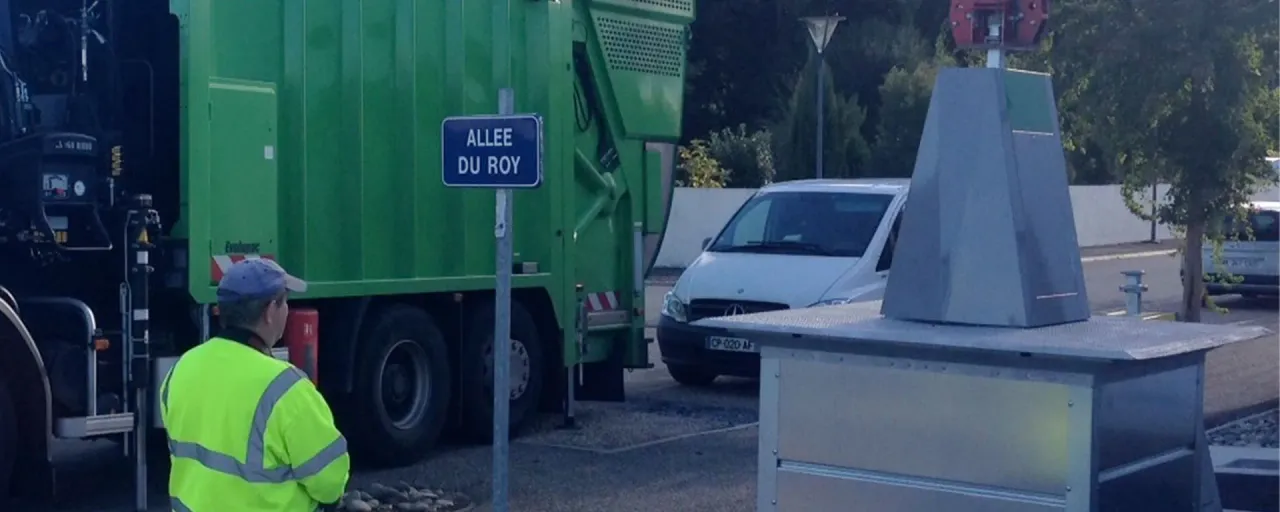
How to choose underground containers: bells, bin platforms and semi-underground systems by capacity, vehicles and service model. Bunder guide for authorities.
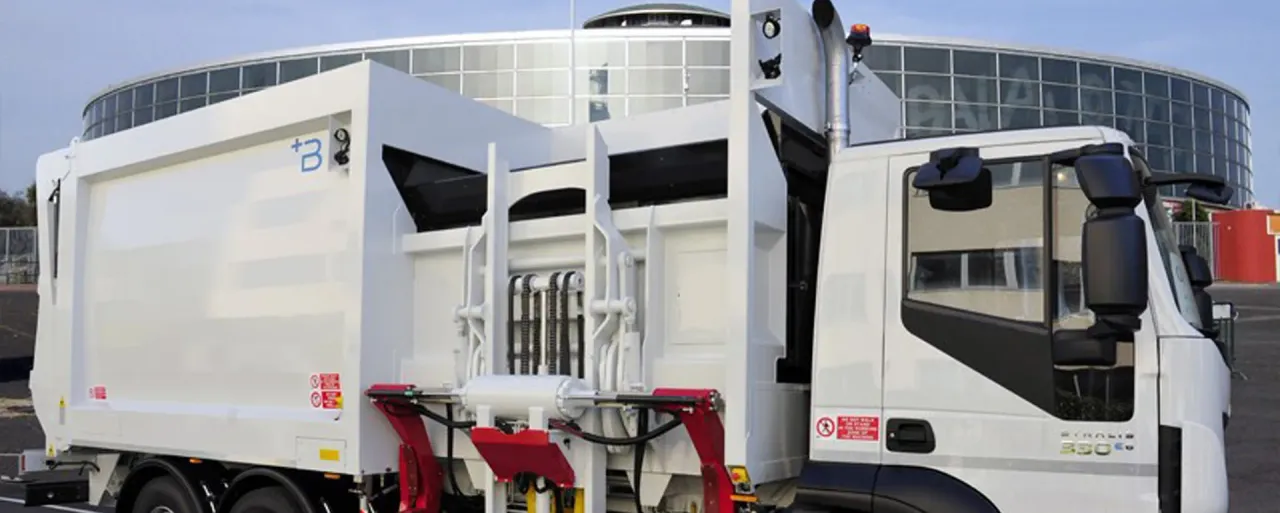
Buying or renting waste collection equipment: comparing TCO, maintenance, service life, downtime and operational requirements. Bunder guide to the decision.
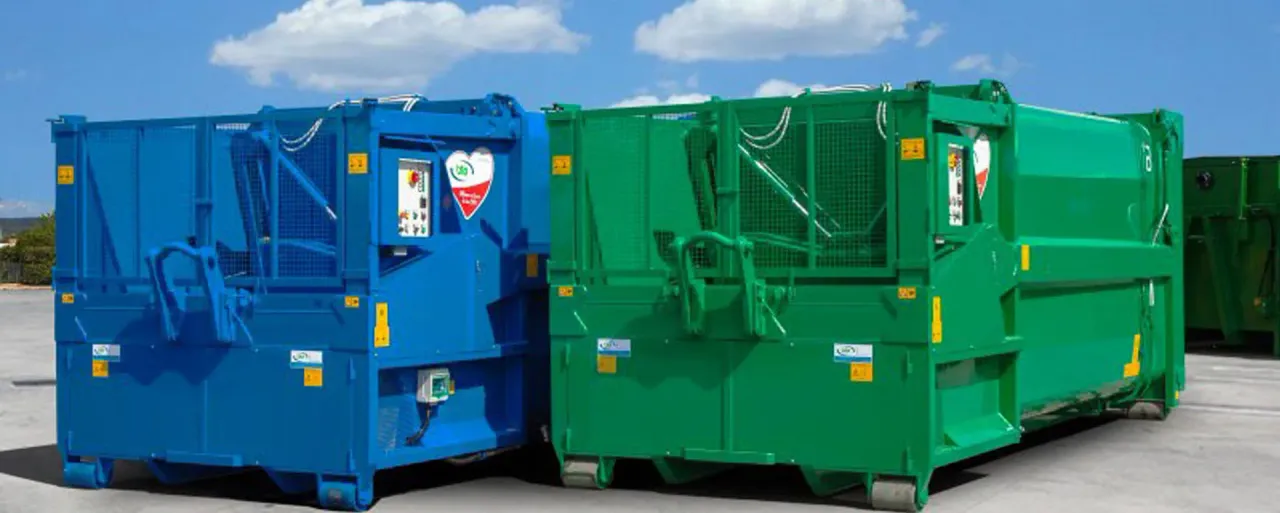
Press containers, hook-lift compactors or conventional skips: how to choose by material, volumes, compaction and logistics. Bunder analysis for depots and services.