Refuse compactors
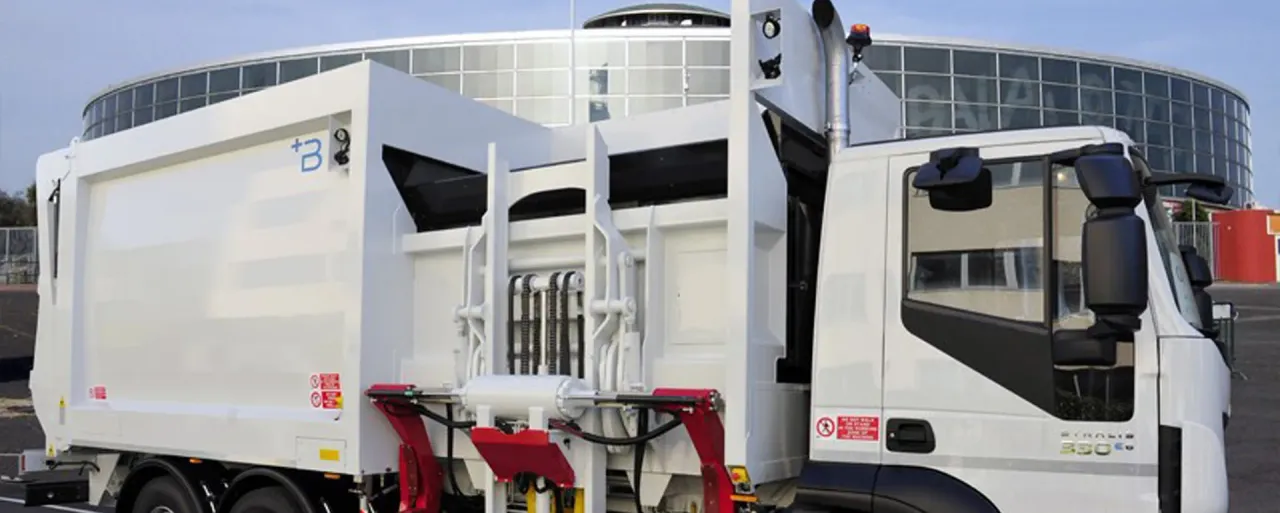
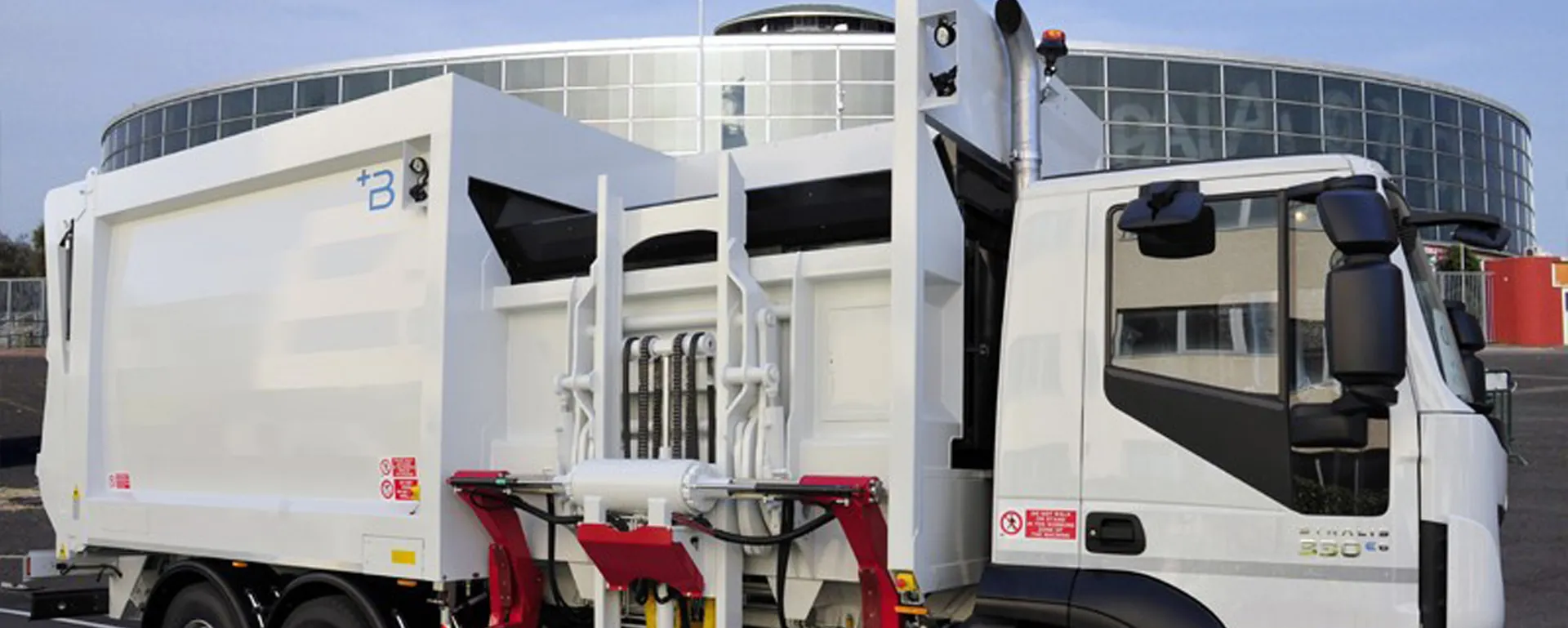
We configure side- or rear-loading refuse compactors on truck chassis, including multi-axle, for every waste type.
Discover more

Guides and resources
Comparing side-loading and rear-loading refuse compactors: bins, crew, road layout, fleet and service organisation. Bunder guide to choosing a system.
Choosing between a side-loading and a rear-loading refuse compactor means choosing a collection mode, not just a body configuration.
The difference concerns how waste is deposited, which containers are used, how many crew are involved, how collection points are laid out, road layout and round organisation. The right question is therefore not which system is absolutely better, but which is more coherent with the service the operator must run.
Bunder offers both configurations through its urban hygiene equipment range, with OMB side- and rear-loading solutions. The range is presented as part of an integrated system for waste collection, transport and management.
The main difference is the point from which the container is lifted and emptied.
In a side-loading system the bin is normally positioned to the side of the vehicle. A grab system moves the container, lifts it and empties it into the hopper. OMB side-loading solutions were developed around street collection with stationary bins and can be configured for single-operator service. The manufacturer highlights standardisation of the grab, emptying and repositioning cycle.
In a rear-loading system deposit and lifting take place at the rear of the body. The configuration can support different collection organisations and may integrate bin lifters or other automatic loading devices. The OMB Legend L system, for example, is designed to integrate various lifter solutions and can work both as a collection vehicle and as a transfer station for satellite vehicles.
This distinction is the starting point, but it is not enough to choose the vehicle.
Before the truck comes the service.
An operator collecting mainly stationary street bins may have very different needs from one working door-to-door, with manually moved containers or a mix of domestic and neighbourhood collection.
The side-loading system is particularly tied to automated street collection with stationary bins. OMB describes its side solution in relation to this model and single-operator operation.
The rear-loading system offers a very flexible configuration for services where deposit can go directly into the hopper or through different lifting devices. Legend L was also designed to interface with satellite vehicles, allowing articulated collection systems.
A first practical rule follows:
the vehicle must be chosen for the planned collection model, not the other way around.
Side loading becomes attractive especially when the service is organised around stationary bins that the vehicle can reach easily.
The configuration can concentrate grab and emptying operations in the vehicle, leaving the operator in the cab. OMB describes the side system as single-operator and lists cameras and sensors among elements used to control the process.
This can have important consequences for work organisation.
If the route is homogeneous and collection points are prepared for automated grabbing, the process can be strongly standardised.
The benefit, however, depends on design quality.
A side-loading vehicle cannot compensate for poorly placed bins, inaccessible collection points or a route that constantly forces the vehicle to interrupt operations.
Single-operator service is one of the main distinguishing features of side collection, but it must be assessed on the real route.
Running the service with the driver alone can be particularly interesting when:
With obstacles, misaligned containers, complex access or manual steps, part of the organisational advantage can shrink.
Service design remains decisive.
Rear loading is particularly interesting when the fleet must handle different collection modes or when the system must be compatible with different containers and devices.
The OMB Legend L, for example, is designed with a rear hopper compatible with various lifter solutions and a configuration that also allows use with satellite vehicles.
This flexibility can help services that must combine several operational modes.
A concrete example is collection using smaller vehicles for certain zones and a main compactor to receive and compact collected material. The rear system can be configured this way, becoming a transfer point for the satellite vehicle.
Rear collection is also compatible with door-to-door systems and setups with bin lifters. OMB presents its rear system as usable both as an active vehicle and as a transfer point for satellite vehicles.
Do not choose the compactor without checking which containers will be used.
The side system normally assumes stationary containers compatible with the vehicle grab group. For OMB solutions, the range includes sheet-metal stationary bins for urban collection designed for the side system.
On the rear system, the body can be configured for different lifting devices. Legend L provides a hopper designed to integrate various lifter solutions and a wide loading mouth to facilitate interfacing with satellite vehicles.
During selection, relate at least three elements:
bin + grab/lifter system + refuse compactor.
Changing one may require checking the others.
Road layout is one of the aspects most often underestimated when choosing the system.
A compactor must reach the collection point and complete operations without unacceptable interference with traffic.
On a narrow street, lateral bin position, grab arm access and any need to keep a precise distance from the container become relevant design elements.
In other situations the rear system may offer more flexibility, especially when containers must be moved or when the service uses different deposit modes.
There is no universal rule linking “historic centre” and “rear loading”. Configuration must be checked against the street, containers, manoeuvres and actual collection mode.
The same applies to tourist areas, commercial zones, high-density districts and heavily trafficked roads.
One of the most frequent comparisons concerns staffing.
The side system can be designed for single-operator service. OMB explicitly describes this feature and links cycle automation to the driver managing the process from the cab.
The rear system can foresee different operational configurations.
It is therefore wrong to simplify by saying a rear compactor always requires a fixed number of operators. Actual crew need depends on collection type, lifter automation, satellite vehicle use and operator procedures.
Historical ISPRA technical notes indicate, for heavy compactors emptying bins, one or two collectors besides the driver, while for side-loading compactors they describe the possibility of emptying large-capacity bins with a single operator. Evolution of modern bodywork must be considered before applying these figures automatically to a current vehicle.
This matters for anyone preparing a specification: crew numbers should not be deduced simply from “rear” or “side” but from technical configuration and service model.
Comparison between side and rear loading is often reduced to emptying cycle speed.
Total service time includes much more:
The side system can achieve high cycle standardisation when container, vehicle and route are designed to work together. OMB identifies speed and standardisation of grab, emptying and repositioning among the main advantages of side collection.
On the rear system, greater flexibility can matter when the service has heterogeneous collection points or deposit modes.
The question to ask is therefore not:
“Which vehicle empties a bin faster?”
but:
“Which system completes the whole round with the fewest unnecessary operations?”
This is one of the less known aspects of the comparison.
A satellite vehicle can work in zones where a larger truck struggles. Material is then transferred to a main vehicle.
The OMB Legend L system was also designed as a transfer point for satellite vehicles and is available in several configurations.
Such a setup can be interesting for:
OMB also has dedicated satellite vehicles for urban and door-to-door collection.
In these cases the side/rear comparison should not look only at the main compactor.
The whole system must be assessed.
Equipment volume matters, but must not be confused with actual transport capacity.
For Legend L, configurations from 15 to 26 m³ are available on different chassis and gross vehicle weights, depending on model.
Vehicle dimensioning must also consider:
Increasing body volume does not automatically mean transporting more waste by weight.
This is especially important when material is dense and mass limits are reached before available volume is filled.
For a waste operator, the compactor is not assessed only when it works.
What happens during maintenance and downtime also counts.
Availability depends on body design, component access, spare parts, technical support and intervention times.
Modern configurations include solutions aimed at easier maintenance. The OMB CMPL 7 EVO, for example, is described as designed with particular attention to reducing press group maintenance time and containing leachate.
These aspects can matter especially for fleets that must guarantee service continuity with few reserve vehicles.
At purchase, it is useful to assess not only the new vehicle but its entire lifecycle.
Safety does not depend exclusively on side or rear choice.
It depends on overall configuration and operating procedures.
Modern side systems can integrate cameras, sensors and grab control systems. OMB lists these technologies among side-loading equipment.
Modern rear systems can integrate cameras, positive-grab sensors and cycles controlled from the cab. Legend L includes infrared camera, positive-grab sensors and discharge cycle from the cab among standard equipment.
The right question for an operator should be:
which operations must the crew perform manually and which can be automated or assisted?
That allows assessment of the real safety and ergonomics of the configuration.
The choice is very different for a single vehicle purchase and for fleet renewal.
In an established fleet consider:
Moving from rear to side collection is not simply replacing the truck.
It may require adapting bins, collection point layout and operating modes.
Conversely, keeping a known system can reduce organisational change, even when an alternative technology might offer interesting features.
The choice must be assessed on the fleet project, not the single vehicle.
Powertrain choice must be separate from loading system choice.
Busi Group solutions include bodywork designed for chassis with different powertrains, including electric and hybrid configurations. OMB has also presented both side and rear systems on electric chassis.
“Electric” and “side/rear” are therefore two different decisions.
The question becomes:
which collection system must the vehicle run and which powertrain best suits that route?
In an urban centre with plannable routes, frequent returns and noise or access constraints, electric power can be assessed as part of the fleet project. The collection system must be chosen separately according to operating modes.
There is no absolute mapping, but some scenarios can guide assessment.
| Operating scenario | Elements to assess |
|---|---|
| Street collection with standardised stationary bins | Side loading, grab system, bin positioning |
| Single-operator service | Cycle automation, cameras, sensors and point standardisation |
| Door-to-door | Rear configuration, lifters, hopper capacity and deposit modes |
| Historic centre or limited accessibility | Vehicle size, satellite vehicles, material transfer |
| Fleet already with specific bins | Compatibility between containers, grabs and bodywork |
| Service with several collection modes | Body flexibility and ability to integrate configurations |
| New tender for urban service | Collection model, productivity, crew, fleet and technical requirements |
| Renewal of existing fleet | Compatibility with vehicles, containers, spares and existing procedures |
This table does not pick a winner between the two systems. It identifies which questions must be explored before choice.
A specification or technical assessment should start from the service.
Before requesting an offer it is useful to have at least:
Collection type
Door-to-door, street, neighbourhood or mixed configuration.
Fractions
Residual, organic, paper, glass, multi-material or other fractions planned by the service.
Quantities
Historical data, production estimates, seasonal variation and waste density.
Routes
Length, gradients, traffic, narrow streets, settlements and distance from plants.
Containers
Type, capacity, attachments and positioning mode.
Crew
Number of operators planned and desired automation level.
Fleet
Existing vehicles, chassis, grab systems and available infrastructure.
Maintenance
Internal organisation, workshop, spares and acceptable downtime.
Safety
Cameras, sensors, access, visibility and operating procedures.
Lifecycle
Not only purchase cost but maintenance, consumption, availability, life and residual value where relevant.
This approach avoids turning the tender into a simple comparison of engine size, body volume and prices.
Side loading is strongly associated with automated street collection with stationary bins and can allow single-operator service when the system is designed for that mode.
Rear loading offers a very flexible configuration, suited to different collection modes and integrable with lifters and satellite vehicles.
Neither system can be declared in advance the right choice for every operator.
Choice depends on how collection points are organised, which containers are used, how routes are structured, how many operators are available and what kind of fleet you want to build.
For an operator starting from scratch, this allows coherent design of the overall system.
For an operator replacing an existing vehicle, compatibility with the fleet and containers already in place can become a main decision criterion.
In side loading the container is lifted from the side by a grab system; in rear loading deposit and lifting take place at the rear of the body. The difference concerns the overall collection system, not only hopper position.
Not automatically. Side-loading configurations are often designed for single-operator service. OMB describes its side solutions on that basis, with automated cycle manageable from the cab. Specific configuration must still be verified.
No. Crew need depends on vehicle configuration, lifter system, container type and collection model. Modern rear systems can integrate automation and different grab systems.
Door-to-door can be managed with several configurations. Rear systems are particularly flexible because they can integrate lifters and work with satellite vehicles. OMB offers rear solutions and satellite vehicles for this type of service.
Yes. The OMB side system was developed for street collection with stationary bins and is associated with the single-operator model.
There is no general answer. Analyse street width, collection points, vehicle accessibility, need for satellite vehicles and deposit modes. In some contexts a combination of satellite vehicle and rear-loading main vehicle can help.
A single-operator configuration can reduce staff directly involved in the emptying cycle. Actual result depends on overall service organisation, route shape and standardisation of collection points.
No. Bin and grab must be compatible. Attachment characteristics, dimensions, position and container configuration must be verified against the vehicle bodywork.
Yes, when vehicle and bodywork are designed for that use. The OMB Legend L system is expressly configured to work as a transfer point for satellite vehicles.
Yes. Busi/OMB solutions include bodywork on chassis with different powertrains, including electric and hybrid configurations.
At least collection model, quantities, fractions, container type and capacity, routes, operator numbers, existing fleet, distance to plant, collection frequency and maintenance mode.
A refuse compactor should not be chosen in isolation.
Side loading can be very effective when bins, routes, grab system and crew organisation are designed around automated, standardised collection.
Rear loading can offer more flexibility when the service must handle different deposit modes, use lifter systems or integrate satellite vehicles.
The right choice comes from analysis of the real service: territory, containers, quantities, routes, fleet and crew.
Bunder offers side- and rear-loading solutions through its urban hygiene equipment range and works on configurations that can be assessed against customer needs.
Bunder product pages and solutions linked to what this article covers.
We configure side- or rear-loading refuse compactors on truck chassis, including multi-axle, for every waste type.
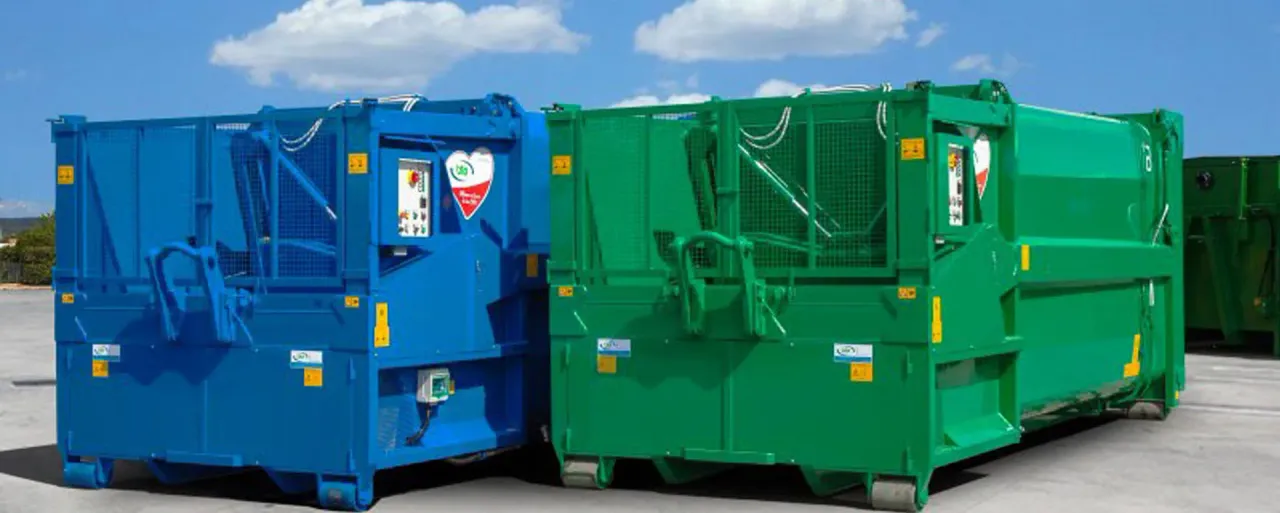
We supply press containers, stationary presses, hook-lift systems and skips for collection and material handling.
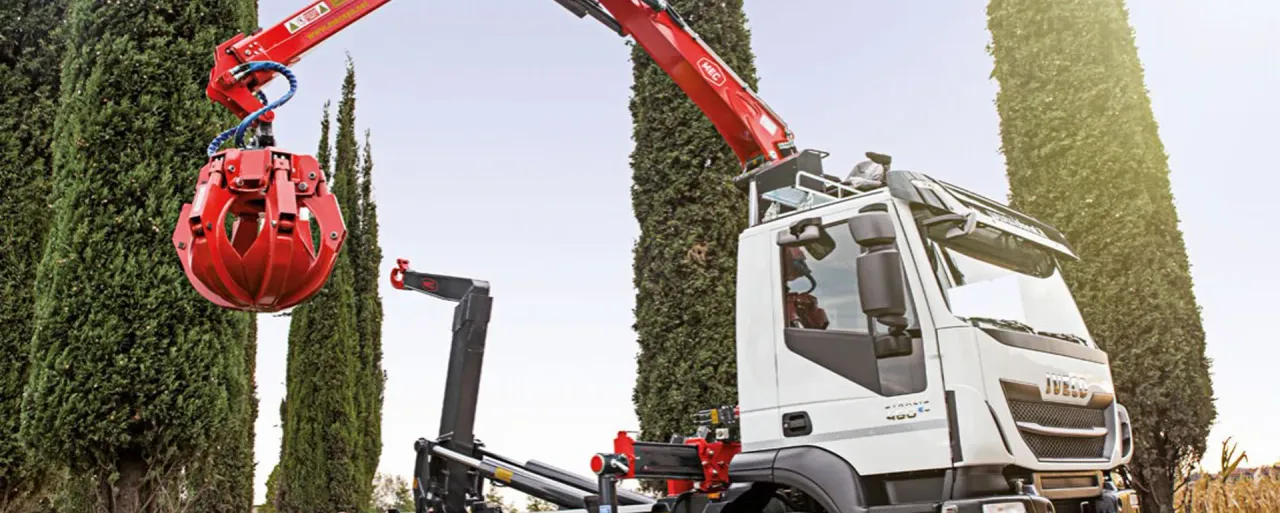
We handle loading and unloading at depots with loaders, grab cranes, multi-skip units and truck-mounted cranes.
Guides and articles linked to this solution: operational context, design choices and useful references.
Press containers, hook-lift compactors or conventional skips: how to choose by material, volumes, compaction and logistics. Bunder analysis for depots and services.
Buying or renting waste collection equipment: comparing TCO, maintenance, service life, downtime and operational requirements. Bunder guide to the decision.
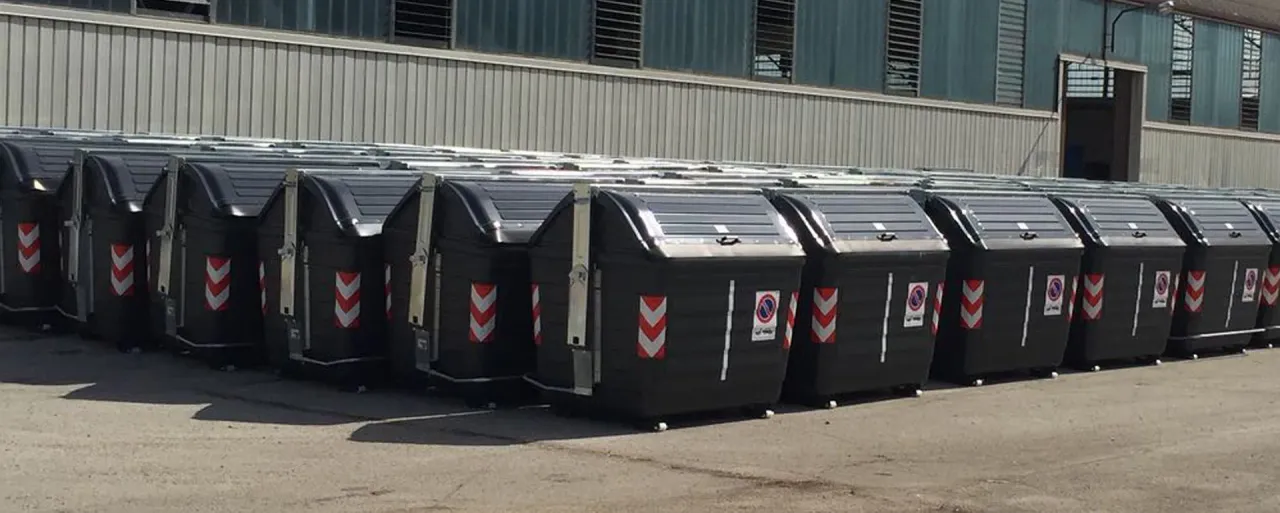
1100, 1700, 2400 or 3200 litres? How to choose bin capacity based on volumes, emptying frequency, streams and vehicles. Bunder insight article.