
Refuse compactors
We select side- or rear-loading refuse compactors, including two-, three- and four-axle bodies, based on waste stream, containers and tender requirements.
Discover more

Guides and resources
How does an automatic side-loading compactor work? Grab arm, compatible bins, body layout and what to specify in the technical tender.
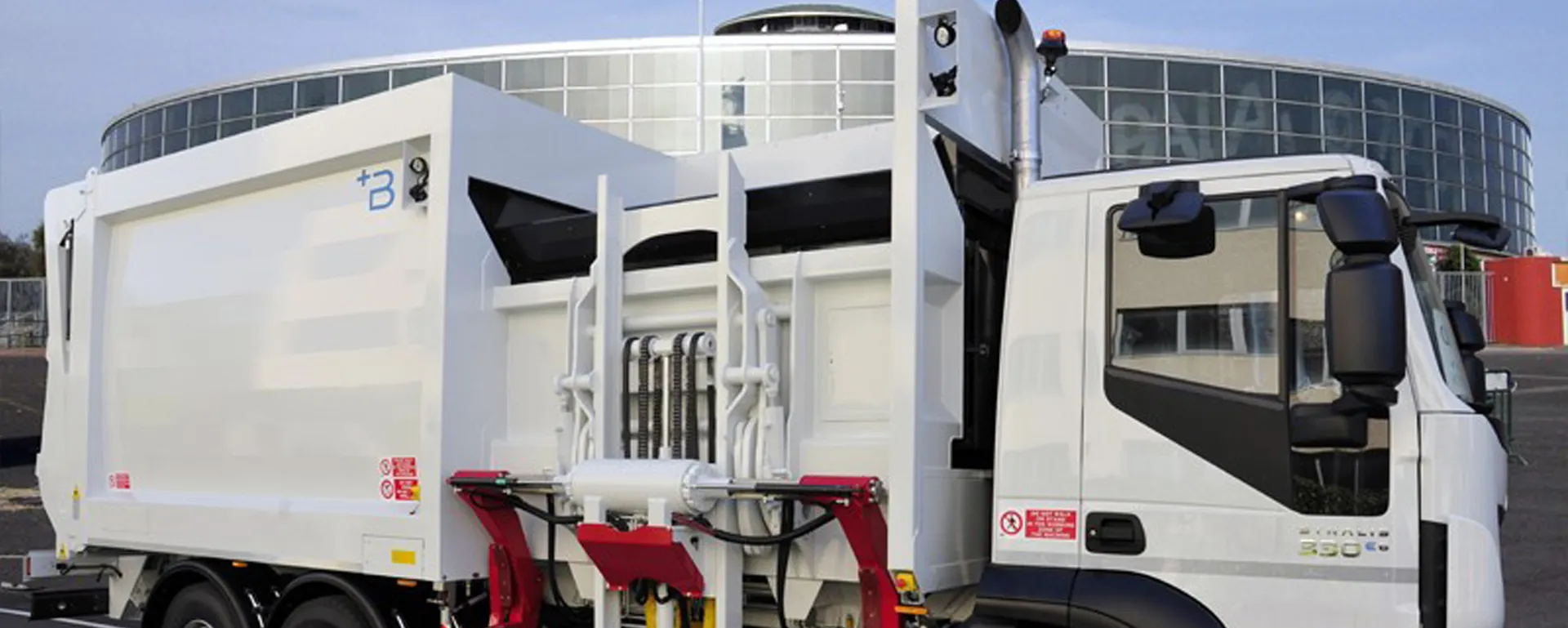
An automatic side-loading refuse compactor is one of the systems used to organise street waste collection through a mechanised grab-and-empty cycle for bins.
Unlike conventional rear-loading refuse compactors, this layout uses a mechanical arm mounted on the side of the vehicle to take the container, lift it and discharge waste directly into the compaction hopper.
Movements are controlled from the cab with commands and monitoring systems, allowing single-operator service when routes and operating conditions support it.
Choosing a side-loading compactor is not only about body volume. You need to assess grab operation, bin compatibility, body specification and the conditions under which collection will run.
For models and layouts see the Bunder refuse compactor range. For the wider organisational comparison between side and rear loading, see side-loading or rear-loading refuse compactor: which system fits your service?
The grab arm is the component that lets the compactor interface directly with the bin.
It is a mechanical system driven by hydraulics, designed for coupling, lifting, tipping and repositioning the container.
The collection cycle unfolds in several stages.
The compactor approaches the bin and stops alongside the collection point. Correct stand-off and alignment matter so the grab can reach the container.
The arm extends towards the bin and the grab interfaces with the lifting points on the container. Control systems confirm a secure grip before lifting.
Once coupled, the bin is raised and moved towards the top of the body along the path defined by the system.
The bin is tipped so waste flows into the hopper. Material is then transferred into the body through the compaction system.
When emptying is complete, the arm returns the bin to its original position, releases it and folds back to the stowed configuration.
The whole cycle is managed from the cab, assisted by control devices and cameras fitted to the body.
Precision in these movements is decisive: a well-designed grab helps keep collection cycles regular, reduces mechanical stress and limits corrective repositioning.
Compatibility between compactor and bin is one of the most important checks before buying a side-loading vehicle.
These trucks are mainly designed for stationary street bins with construction features and grab interfaces that match the lifting group.
This is not a universal system that can empty any container.
Bins must offer suitable geometry, lift points and structural characteristics for automated handling.
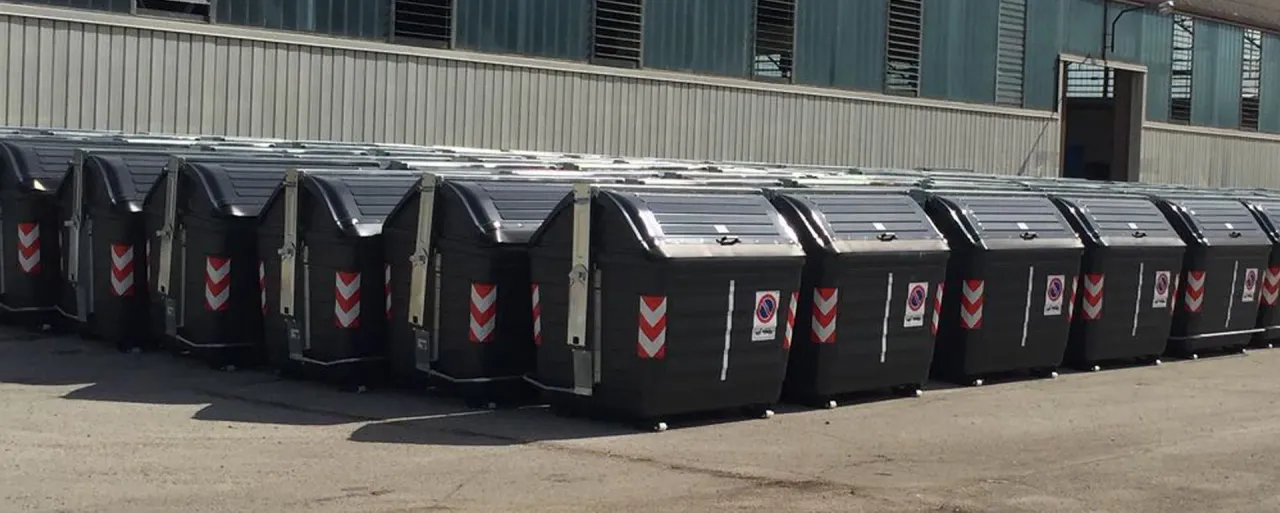
Specialist manufacturers supply sheet-metal stationary bins developed for urban side-loading collection. Layout can be tailored to streams, deposit openings and service requirements.
Separate collection may require different opening solutions for paper, plastic, glass, organics and residual waste.
Before introducing a new compactor you should verify:
When a fleet of bins is already deployed, this review is especially important to avoid replacing or modifying equipment that is still serviceable.
Side loading depends on integrating several subsystems.
The grab is the mechanical part that moves the bin; the hydraulic plant provides the power for each movement.
Hydraulic control quality affects how smoothly operations run, positioning accuracy and the loads passed to mechanical parts.
Electronics matter too. Advanced systems integrate cameras, sensors and cab monitors so the driver can supervise operations.
For example, some advanced side-loading bodies include lift systems that can take bins placed close to walls, with tipping angles of around 60°. Proportional hydraulic circuits control grab movements; multiple cameras and cab displays can show several views at once.
These features show how side-loading evolution is about control and cycle precision as much as collection capacity.
For a municipality or operator buying a new vehicle, the technical specification must describe required operation and the conditions of use.
Stating "side-loading refuse compactor" alone is not enough to define the full supply.
At minimum, consider the following.
Grab system: arm characteristics, coupling method, container movement and repositioning.
Bin compatibility: type, capacity, dimensions and grab interface details.
Operating performance: lift, tip, emptying cycle and handling of different collection conditions.
Hydraulic system: design and motion control, with emphasis on grab precision.
Electronics and monitoring: cameras, displays, grab sensors and manoeuvre control devices.
Safety: protective devices, visibility during operation and procedures for using the equipment.
Body and chassis: dimensions, masses, payload, vehicle characteristics and chassis–body compatibility.
Maintenance and support: component access, spare parts availability and technical documentation.
Requirements should be verifiable and aligned with the service. Specs can describe functional performance and allow equivalent solutions where applicable.
The collection cycle should be part of the evaluation: the vehicle must work with the bins actually on the ground and the operating conditions the operator defines.
Side loading has clear advantages, but it is not always the right fit for every collection organisation.
The first limit is container compatibility. When the service relies mainly on small wheeled bins or mixed container types, a side system built for stationary street bins may not match existing operations.
Collection point layout can also constrain the choice. The arm must reach the bin and the truck must have space to position correctly.
Very narrow streets, lateral obstacles, parked vehicles or non-standard stops can complicate the automated cycle.
Service variety is another factor. When manual work, door-to-door collection or emptying different container types are frequent, rear loading may offer more flexibility.
In those cases the whole service should guide the decision—not side loading alone because of its automation level.
Before requesting a technical proposal it helps to gather:
These points support evaluation of the compactor and the wider system of vehicle, grab, bins and route.
When renewing an existing fleet, compatibility with equipment already in place is critical. For a new service, bins and compactors can be designed as an integrated system from the start.
Bunder Company offers refuse collection solutions with side- and rear-loading refuse compactors from specialist manufacturers.
The side-loading range includes layouts for automated street collection, with grab systems, electronic control and different body configurations depending on vehicle and service.
The aim is a configuration aligned with deployed bins, local constraints and operational needs.
See the refuse compactor range for available options.
For organisational and operational differences between the two loading systems, see side-loading or rear-loading refuse compactor: which system fits your service?
Hydraulics move the arm to couple the bin, lift it, tip it over the hopper and return it to its start position. The driver controls the cycle from the cab with commands and monitoring devices.
The system is designed for automated collection with the driver at the wheel, without a ground operative for a normal emptying cycle. Actual crew deployment still depends on the service and operating conditions.
It is aimed mainly at stationary street bins compatible with its grab group. Dimensions, attachments and structural details must be checked against the body.
Yes. The system runs the programmed handling sequence automatically. The driver supervises and commands the cycle from the cab using controls and vision/safety systems.
Verify bin compatibility, grab characteristics, hydraulics, control systems, chassis and access conditions at collection points.
It is not the layout normally used for door-to-door services based on wheeled bins. It is intended mainly for street collection with stationary bins compatible with side grab systems.
An automatic side-loading compactor is not just a truck with a mechanical arm. Grab, electronics, hydraulics, bins and route must work as one system.
The right configuration standardises emptying, improves cycle control and can support single-operator organisation.
Before purchase, start from how collection is run and verify compatibility across all components.
Bunder supports municipalities and operators when evaluating side-loading refuse compactors and choosing layouts that fit the service.
Bunder product pages and solutions linked to what this article covers.
We select side- or rear-loading refuse compactors, including two-, three- and four-axle bodies, based on waste stream, containers and tender requirements.

We integrate hydraulic platforms and underground bins from 1,100 to 3,200 L when surface space is tight.

We offer polyethylene or steel bins for street collection, rear loading or single-operator side loading.
Guides and articles linked to this solution: operational context, design choices and useful references.
Comparing side-loading and rear-loading refuse compactors: bins, crew, road layout, fleet and service organisation. Bunder guide to choosing a system.
How to evaluate a refuse compactor for collection: service model, bins, routes, chassis, payload and technical requirements.
How to draft specs for waste collection containers and equipment: requirements, CAM, technical details and equivalence. Bunder guide for authorities.