cestini-portarifiuti-compattanti-2
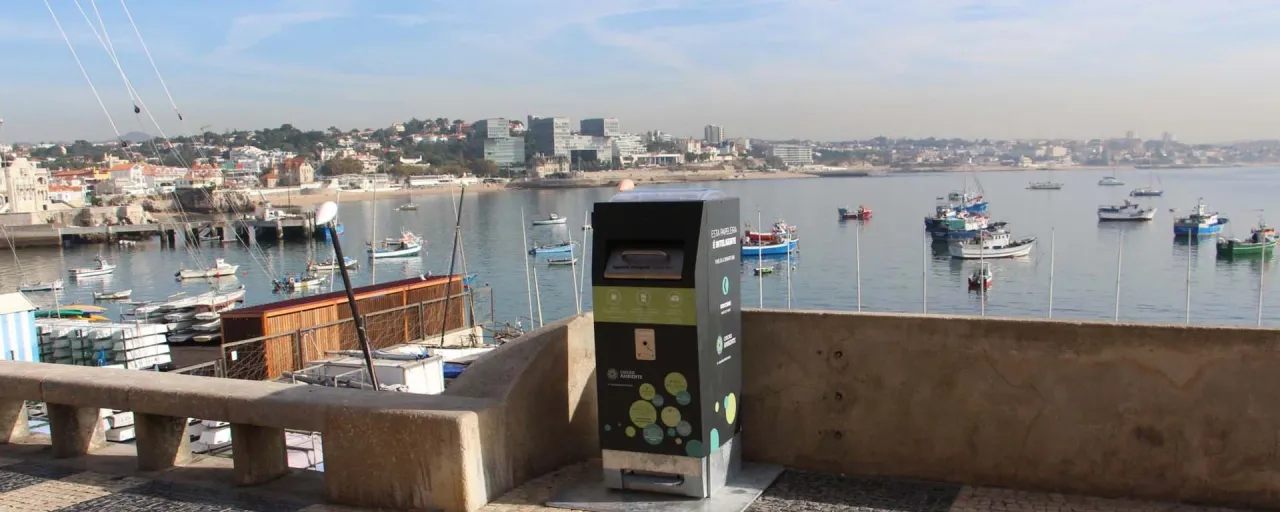
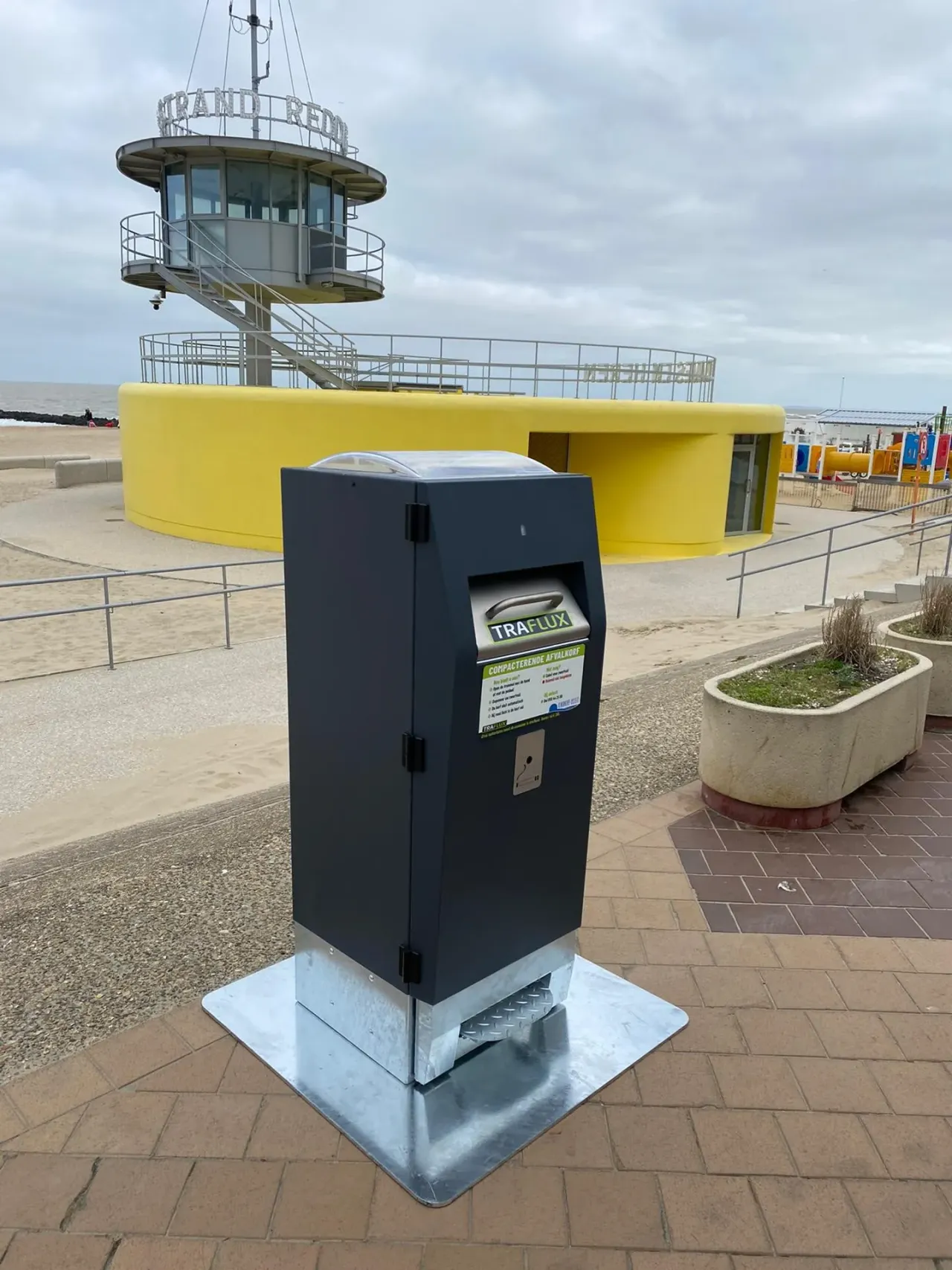
We install solar-powered compacting bins and connect them to cloud-based remote monitoring.
Discover more

Guides and resources
Smart bins, compaction and fill-level sensors: when smart collection pays off and how to assess data, routes and costs. Bunder Waste Technology guide.
A smart bin does not become useful simply because it contains a sensor.
The value of a smart solution appears when collected data concretely changes how emptying, maintenance and container distribution on the territory are organised.
That is the difference between installing technology and actually using an intelligent management system.
For a municipality, waste operator or company managing large public areas, the problem is concrete: some bins fill quickly and need frequent visits, while others are emptied when they still hold little material. The result is a service hard to dimension on schedules and fixed routes alone.
Fill-level sensors and compacting bins can address this imbalance by providing information on real container status and, on models with a press, increasing effective capacity before emptying. Bunder offers both technologies, together with cloud platforms for monitoring and data management.
This is the first distinction to clarify.
A fill-level sensor measures container status and transmits data to software. The aim is to know which containers need intervention and which can stay in service.
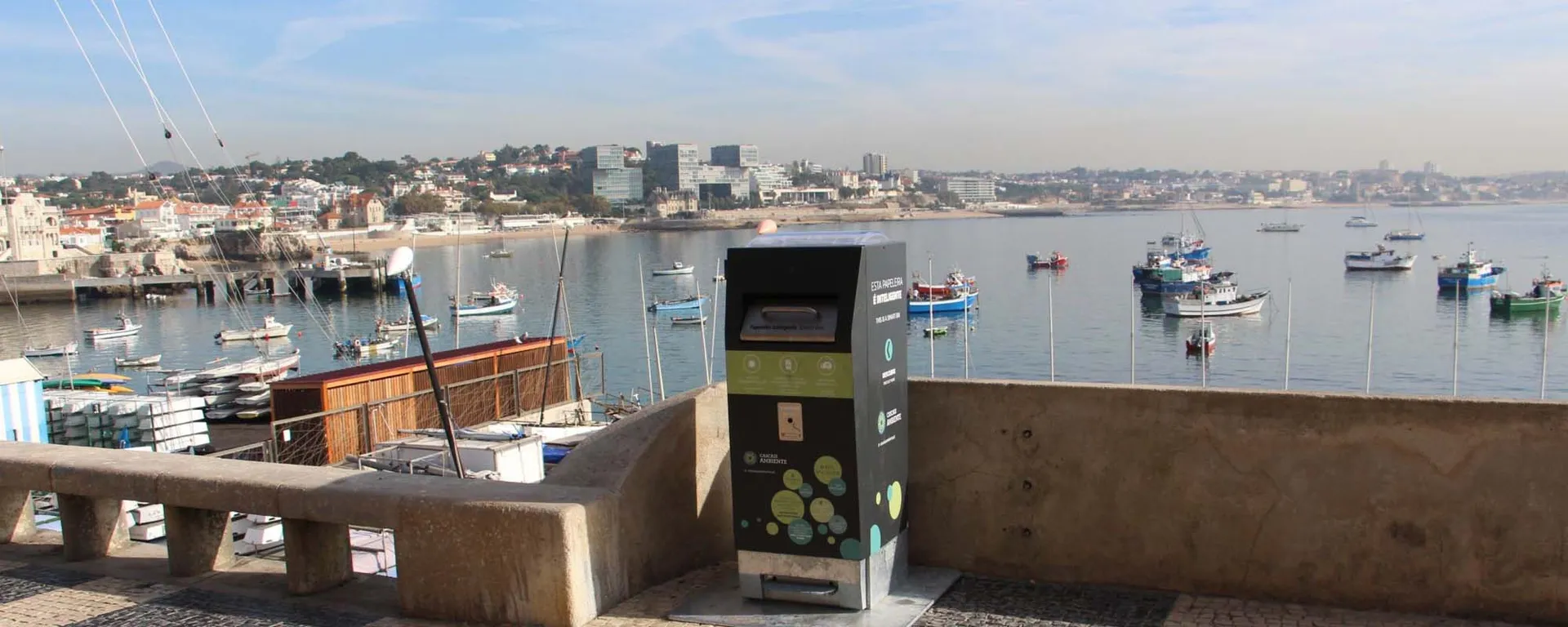
A smart compacting bin adds physical compaction that reduces material volume before emptying. In WasteMate models offered by Bunder the bin integrates a press, solar power and remote monitoring.
The two technologies can be considered at different levels:
sensor = information on container status
compaction = greater operational capacity of the container
software = using data to organise service
The most interesting solution is not necessarily the one with the most technology. It is the one that solves the service’s actual problem.
A sensor becomes interesting when the operator needs to know what happens between one collection pass and the next.
In a traditional service the operator follows a fixed round. The bin is emptied because that pass is scheduled, not because the system has established the container is near its operational limit.
With a sensor system, fill level can be monitored remotely. Platforms linked to WasteMate systems can also collect information on fill level, battery status, solar production and number of deposits, plus historical data.
This changes the type of information available to the operator.
You no longer need to reason only in terms of:
“This bin is emptied every Tuesday.”
You can start reasoning in terms of:
“This bin normally reaches a certain level in this time window and today is following a different pattern.”
The second piece of information is much more useful for redesigning service.
The problem smart collection tries to address is mainly imbalance.
In the same city you can have:
A system without data tends to treat these points uniformly.
A data-based system allows different behaviours to be distinguished.
Bunder describes this model through the CleanCityManager platform, linkable to WasteMate compacting bins and sensor-equipped containers, with dashboard, alerts and historical data usable for collection planning.
A scientific study on smart collection shows the same principle: fill-level data can be used to include in routes only containers that actually need service, rather than indiscriminate collection.
The point is not therefore “having a connected bin”.
The point is using data to change the route.
Not all bins present the same problem.
A small bin on a street with very low waste production is unlikely to justify the same technological infrastructure as a high-traffic point.
Smart systems are particularly interesting when utilisation is variable or when the cost of a full bin is high.
Among scenarios Bunder indicates for its solutions:
The criterion should not be area type alone.
A little-used park does not necessarily need a smart bin. A small collection point in front of a station or stadium can behave very differently at peak hours or during an event.
What counts is variability of demand.
A sensor answers:
“How full is this container?”
A compactor answers:
“How much material can I hold before emptying?”
In WasteMate models offered by Bunder an integrated press compacts waste inside the bin, while monitoring allows remote follow-up. The manufacturer indicates for current WasteMate 120, 160 and 240 models a press, solar power and online monitoring.
This combination matters because it can address two problems at once:
insufficient physical capacity
and
inefficient collection scheduling.
A bin that fills quickly can be handled both by increasing effective capacity through compaction and by scheduling emptying when the system signals need.
Avoid oversimplification here too.
Compaction ratio depends on waste type and bin model. The WasteMate manufacturer reports different values by configuration and material, with examples above 5 times and, for certain flows, above 8 times.
That does not mean the bin can be treated as “eight times larger” in any condition.
Result depends on:
For serious technical assessment consider real capacity and flow behaviour, not only the theoretical ratio declared by the manufacturer.
Fill data is probably the most visible information, but not necessarily the only useful one.
Platforms linked to WasteMate can also collect information on location, energy status, events and usage history. CleanCityManager is described as a cloud system for remote monitoring and consultation of historical data.
This opens a second possibility: using data not only to decide the next emptying but to understand how service performs over time.
After several months the operator can ask:
This is the step from simple telemetry to service management.
A dashboard full of charts does not automatically improve collection.
Value appears when data is linked to action.
For example:
The sensor signals an abnormal level increase.
The operator checks the point.
If it is an occasional event, an extraordinary visit can be scheduled.
If the pattern repeats every week, the round can be changed or bin capacity increased.
If an area is systematically underused, equipment distribution can be reassessed.
This logic can be represented as:
measurement → analysis → decision → intervention → new measurement.
Without the last three steps, the system remains mainly a monitoring tool.
“Predictive” is often used too easily.
Knowing a bin is at 70% is not enough to speak of predictive maintenance.
Useful forecasting needs sufficient historical data and a model that accounts for fill rate and variation over time.
CleanCityManager is also described in relation to historical data analysis and more efficient route planning. Bunder also presents the possibility of using data for analysis and management optimisation.
For an operator the difference matters.
Monitoring: “The bin is at 80%.”
Forecast: “At the current rate it will reach operational threshold within this time window.”
The second can be used to plan service. The first mainly snapshots current status.
This is probably the most important economic assessment.
The goal should not be turning every city bin into an IoT device.
It may be more efficient to start with points of highest variability or operational cost.
For example:
Bunder presents compacting bins and monitoring systems as suited to places with high traffic and variable waste production.
A pilot on these areas can also provide enough data to decide whether to extend technology elsewhere.
Not all sensors are equivalent and the sensor is not the only component to verify.
For a professional project consider at least:
Data must be reliable enough for the operational decision the operator wants to take.
A few percentage points difference can be irrelevant in some applications and important in others.
A system that rarely updates data may suit containers with slow variation but be less useful in areas with sharp peaks.
The sensor must communicate from its installation point.
Connection availability can depend on location, infrastructure and system used.
A device on a street bin must run for long periods with maintenance compatible with service.
WasteMate integrates solar panel, battery and monitoring; the manufacturer also declares data transmission via network infrastructure.
An urban bin is exposed to impacts, vandalism, water, dust and intensive use.
Electronics must be considered together with the bin’s physical structure.
Know how sensor, battery, panel, communication system and software are managed.
Technology needing frequent intervention can reduce the operational advantage it should deliver.
A common mistake is assessing smart technology as a simple hardware question.
The sensor produces data.
Software organises it.
The operator interprets it.
The operational process decides what to do with it.
Bunder describes CleanCityManager as a cloud platform accessible via browser and mobile devices, with dashboard and information on the bin and container fleet. The platform can be used with WasteMate and sensors on other containers.
This becomes particularly important as the number of points grows.
Managing five smart bins and managing five hundred are very different organisational problems.
For a large operator it can matter not to have a completely separate platform.
Bunder indicates the possibility of linking sensor data to a customer application via API.
This opens interesting scenarios when the operator already has:
The principle is simple: data should enter the existing operational process when technically possible.
Creating a parallel system that forces operators to consult different tools continuously risks reducing real usefulness of the technology.
Waste service management today is accompanied by regulatory quality obligations and indicators.
ARERA introduced TQRIF, which sets contractual and technical quality obligations and related general standards differentiated by regulatory schemes. In 2026 the Authority continues collecting data from operators on service quality.
This does not mean a smart bin is automatically a regulatory compliance tool.
The link is more indirect.
Monitoring can produce data useful to understand how a collection point is actually used, how often to intervene and how to improve internal organisation.
ARERA has also introduced monitoring and transparency tools on separate collection efficiency and treatment plants.
Technology can therefore fit a broader performance measurement path, but must not be presented as replacing obligations and methods set by regulation.
To see whether smart collection really pays off, the correct comparison is not:
traditional bin vs smart bin
but:
technology cost vs avoidable costs or measurable benefits in service.
Assessment should consider at least:
For example, if an area needs daily passes because some bins quickly reach limit, collection cost can be significant.
If the same area needs few interventions and shows stable behaviour, monitoring advantage can be much smaller.
Convenience therefore comes from frequency and variability of the problem, not from technology alone.
For a municipality or operator it can be useful not to start with a large purchase.
A reasonable procedure can be:
Phase 1: identify critical points
Locate bins that most often show filling, complaints, spillage or closely spaced passes.
Phase 2: collect baseline data
Measure for several weeks emptying frequency, use, times and interventions.
Phase 3: install a limited number of devices
Use smart bins and sensors only at selected points.
Phase 4: change operational behaviour
Installing technology is not enough. Routes must change based on available information.
Phase 5: compare results
Compare intervention count, kilometres, times, critical fill levels and other indicators defined at the start.
Phase 6: decide on extension
Only after verifying real behaviour decide which areas deserve technology extension.
This approach reduces the risk of buying many devices before demonstrating the operational process can actually use their data.
The sensor mainly solves the information problem.
The compacting bin can also solve a physical capacity problem.
That difference can be decisive where bin volume is the real limit.
Current WasteMate models in the manufacturer range include different internal containers, integrated press, solar power and online monitoring. WasteMate 240, for example, is also intended for points with high short-term use peaks.
Imagine a square normally used during the week but subject to large weekend flows.
A simple sensor can say when the bin is almost full.
A compacting bin can delay reaching the physical limit and, at the same time, signal when emptying is needed.
In such a context the two functions have complementary value.
A full bin is not only an economic problem.
It can produce:
Monitoring can help prevent exceeding operational level, but only if alerts generate a fast enough response.
This matters too.
An alert nobody handles does not fix a full bin.
Before introducing technology define who receives the alert, who decides intervention and with what priority it is executed.
A smart collection project should specify at least:
Device data
Sensor type, transmission frequency, power, connectivity and location.
Container data
Position, capacity, type, status and link to service.
Operational data
Fill level, events, interventions and history.
Software system
Dashboard, alerts, reports, mobile access and export capability.
Integration
Possible API or link with operator systems.
Maintenance
Replacement and support mode for devices, batteries and components.
Data security
Access, authentication, user management and infrastructure protection.
This is particularly important for public purchase or a large fleet.
The request should not stop at:
“supply of smart bins with sensor”.
It should describe which operational result must be achieved.
If operators keep exactly the same rounds regardless of data received, a significant part of potential benefit stays unused.
Lots of data does not equal better management.
First define which decisions data must support.
Technology must fit area, bin, collection and maintenance.
A device in a poorly covered location can create a system technically present but operationally little useful.
Real cost includes software, connectivity, maintenance, data management, training and operational organisation.
Platform value grows when today’s data can be compared with behaviour over previous weeks and months.
Choice can be guided as follows.
| Scenario | Solution to assess |
|---|---|
| Low traffic and very stable use | Traditional bin |
| Highly variable fill | Fill-level sensor |
| Point with frequent overflow | Sensor + dynamic collection management |
| High production and volume limit | Compacting bin |
| High and very variable production | Compacting bin + monitoring |
| Area with many containers and complex routes | Sensor network + management platform |
| Municipality or operator optimising rounds progressively | Pilot project with data collection |
| Area with existing software systems | Solution with integration/API capability |
The table is a starting point, not a substitute for service design.
The most useful question before purchase is not:
“How smart is the bin?”
It is:
“Which decision will we be able to take with the data that we cannot take today?”
If the answer is concrete, technology can have real value.
It may be changing a collection round, moving a bin, increasing capacity at a critical point, reducing unnecessary passes or scheduling intervention before the container reaches a problematic condition.
Bunder offers WasteMate compacting bins, fill-level sensors and software platforms for monitoring and data management. Solutions are intended for public and private contexts where container behaviour can be monitored and used to organise service.
Choice should start from area, problem and indicators the operator wants to improve.
Only then does choosing technology make sense.
A container with technologies that allow monitoring its status and transmitting information to a software platform. Compacting models can also integrate a press to hold more waste before emptying.
The sensor mainly provides fill-level and container status information. A smart bin can also integrate compaction, autonomous power, location and other functions.
To monitor container status without physical inspection at every pass. Data can organise emptying and analyse service trends.
They can contribute when data is actually used to change route scheduling. Studies on smart waste collection have used fill data to decide which containers to include in routes.
Compaction can significantly increase accumulable material, but result depends on model and waste type. The WasteMate manufacturer declares different compaction ratios by model and material.
WasteMate models currently presented by the manufacturer include solar panel power and online monitoring.
Particularly at points where waste production is variable or high, such as central areas, stations, airports, parks, shopping centres, event venues and tourist zones. Bunder presents its solutions for several of these contexts.
Bunder indicates integration with customer systems via API. Concrete feasibility depends on architecture of systems involved.
There is no standard price. Cost depends on model, capacity, compaction, sensors, software platform, connectivity and required configuration.
Not necessarily. It can be more rational to start with points of highest variability, emptying frequency or operational cost and verify results before extending the system.
No. Monitoring provides information. Economic benefit depends on how the operator uses data to change routes, frequencies, capacity, maintenance and service organisation.
Smart bins and fill-level sensors can become useful tools when there is a measurable operational problem.
If some points fill too early, data can show where to intervene. If others are emptied too often, measurement can reveal oversized service. If the main problem is capacity, telemetry alone may not be enough and a compacting bin may be more interesting.
The most effective model combines:
suitable container + sensor or compaction + software + operational process.
Bunder provides these components through its range of compacting bins, sensors and cloud management systems.
Bunder product pages and solutions linked to what this article covers.
We install solar-powered compacting bins and connect them to cloud-based remote monitoring.
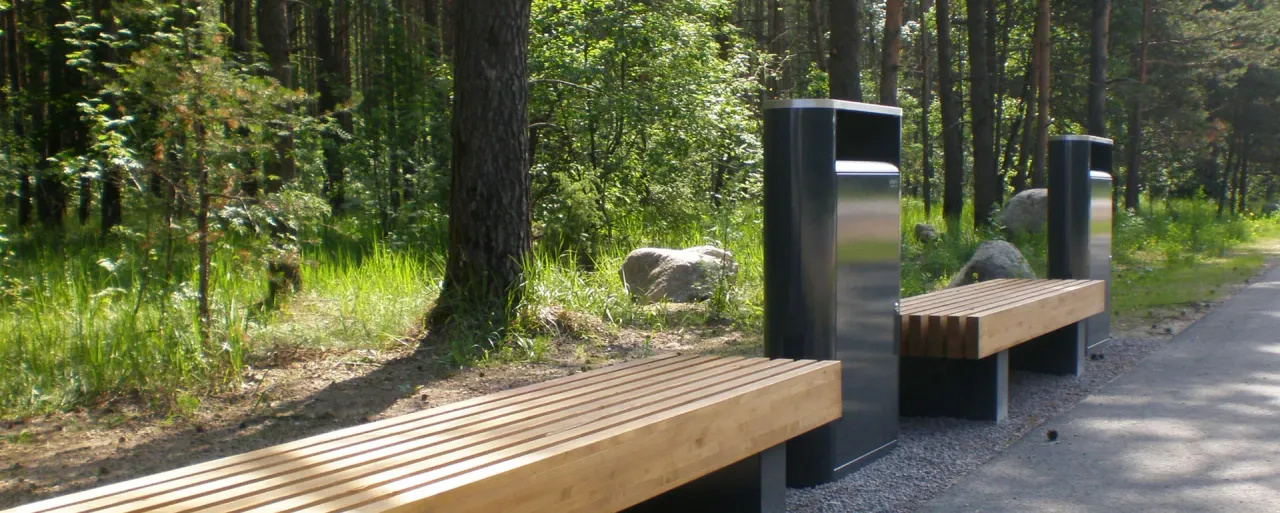
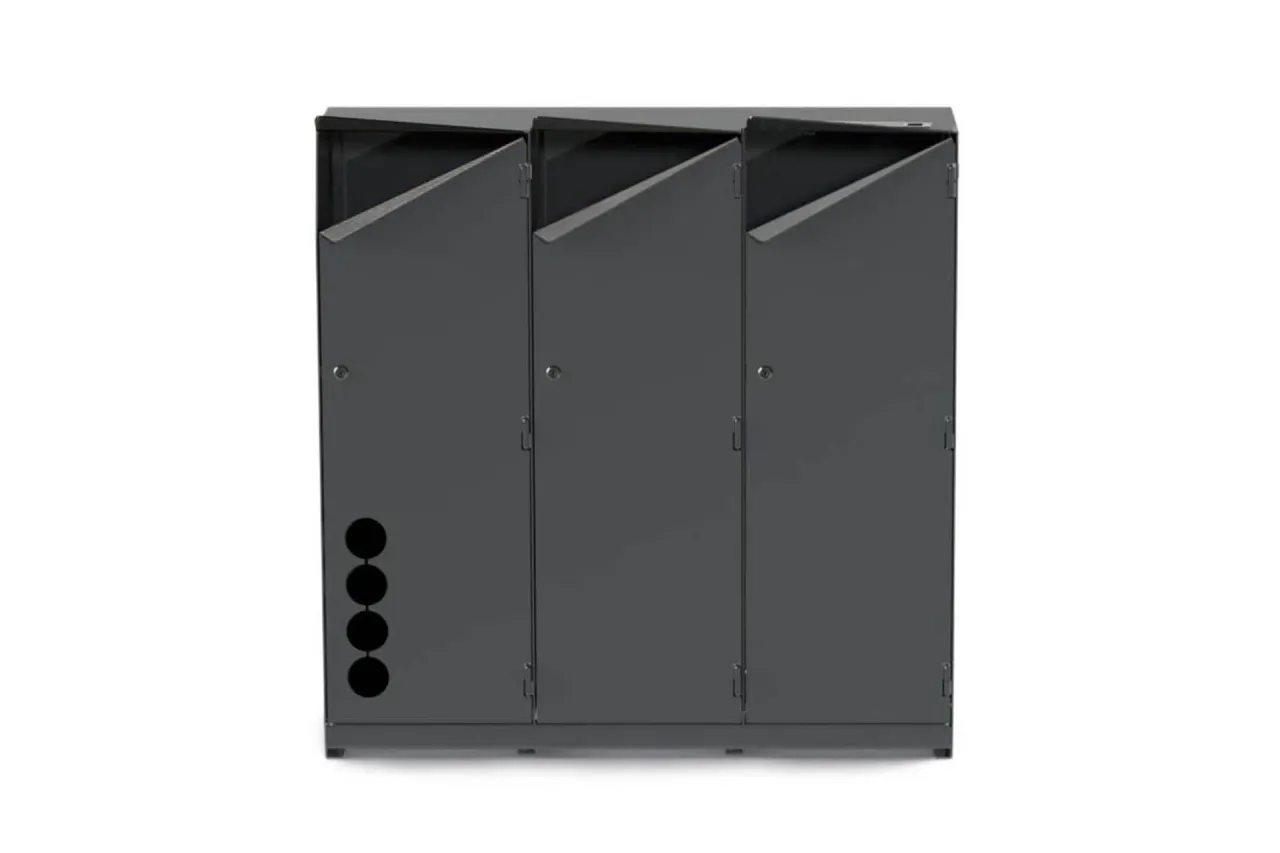
We bring Extery benches, litter bins and contemporary Scandinavian street furniture into public space.
Guides and articles linked to this solution: operational context, design choices and useful references.
CAM for street furniture: materials, durability and documentation before buying litter bins, benches and bollards. Bunder Urban guide for authorities.
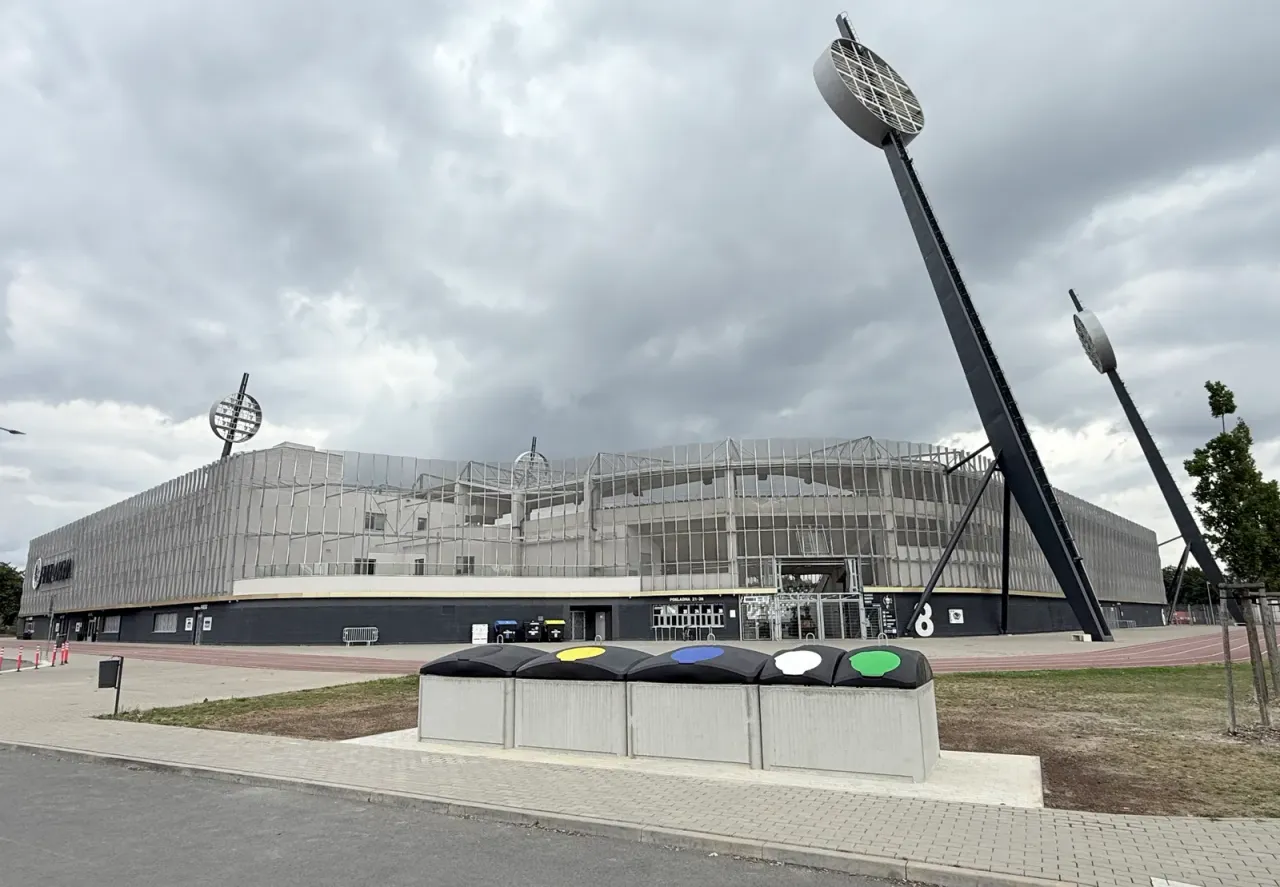
Capacity, streams, layout, traffic, collection vehicles and emptying systems for a neighbourhood eco-island. Bunder technical guide to design.

Electric work tricycles for sweeping, micro-collection and urban tasks: range, payload, bodywork and configuration. Bunder Mobility guide for municipal services.