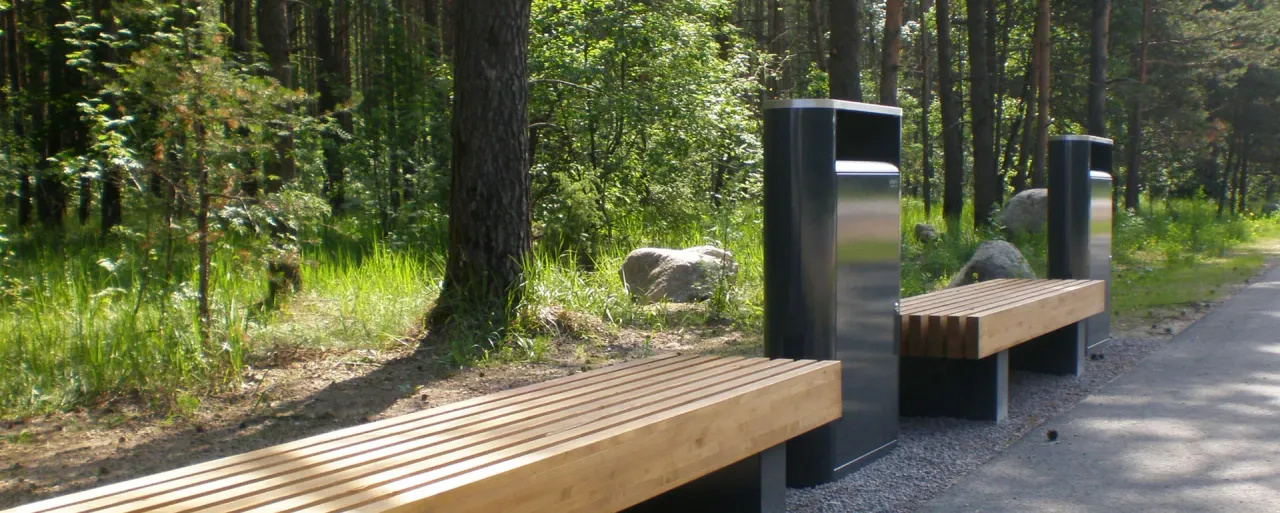
bunder-urban-street-furniture
Discover more

Guides and resources
CAM for street furniture: materials, durability and documentation before buying litter bins, benches and bollards. Bunder Urban guide for authorities.
Buying street furniture with CAM (Minimum Environmental Criteria) requirements does not mean simply picking a product labelled “green” or “CAM compliant”. For a municipality, contracting authority or designer, verification starts one step earlier: understanding which CAM applies to the procurement and which requirements must be demonstrated for each product.
The current reference for street furniture is Ministerial Decree 7 February 2023 on playground design, supply and installation of street furniture and outdoor furnishings, and maintenance. It entered into force on 20 July 2023 and replaced the previous 2015 reference.
For anyone preparing a tender or evaluating an offer, the difference matters: CAM sets environmental requirements and verification methods, while the technical specification must also define the performance needed for the product to be genuinely suited to the place and intended use.
Decree 7 February 2023 covers a wide range of elements for public spaces: benches, seats, planters, cycle racks, barriers, fences, shelters, parking deterrents, speed bumps, signage, notice boards and other items for parks, squares, pavements and outdoor areas.
One distinction often causes confusion in specifications.
The decree states that procurements for containers intended for municipal waste collection are governed by waste-management CAM, not street-furniture CAM. Since 18 June 2025 the updated reference is Decree 7 April 2025, which also covers containers and bags for municipal waste collection.
That does not mean a street litter bin and a bin for separate collection should be treated the same way.
A small litter bin in a square, park or pedestrian route normally falls under street furniture. A container for the ordinary municipal waste collection service must instead be mapped to the relevant waste-management CAM, based on the specific subject of the procurement.
It is therefore useful to define the subject of the purchase correctly before comparing products.
Article 57, paragraph 2, of Legislative Decree 36/2023 requires inclusion in project and tender documentation of at least the technical specifications and contractual clauses contained in the applicable CAM. ANAC reaffirmed in 2025 that these provisions must be incorporated into tender rules and can affect both offer definition and contract execution.
For this reason, CAM compliance should not be assessed through a single generic supplier statement.
You should verify at least four aspects:
The last point is particularly important in procurements made up of many product families.
One cross-cutting criterion in Decree 7 February 2023 concerns ecodesign.
Products first placed on the market must be designed to be durable and, when made of several components, repairable. Parts subject to wear or damage must be removable and replaceable with reasonable ease. For multi-component products, the manufacturer must make spare parts available for at least five years. The criterion also requires documentation useful for disassembly, repair and correct end-of-life management of components.
For a bench, litter bin or bollard this has a practical consequence.
It is not enough to ask how much the product costs at purchase. You need to understand what happens when sheet metal is damaged, when a slat deteriorates, when a component is vandalised or when a fixing part must be replaced.
A repairable product may have a higher purchase price but simpler management over its service life. The assessment should therefore include maintenance, availability of components and replacement times.
CAM 2023 introduces specific criteria depending on the predominant material of the product.
For steel products, a minimum content of recovered, recycled material or by-products is required. The requirement varies with the production route: CAM indicates at least 65% for non-alloy electric furnace steel, 60% for alloy electric furnace steel and 12% for integrated-cycle steel.
This is particularly relevant for bollards, hoops, barriers and many metal street furniture models.
Simply stating “steel product” is therefore not enough to demonstrate compliance. The criterion also concerns origin and composition of the material and must be proved through the verification means set out in the decree.
For plastic or plastic-wood blend products, CAM requires at least 60% recycled plastic by total weight of the product or plastic component.
For furnishings installed in green areas the requirement rises to 95%. For plastic-glass blend products the indicated minimum is 30%.
The 95% figure for green areas illustrates why the same solution cannot be assessed identically in every context.
The intended location of the product can influence the applicable requirement.
For wood, CAM considers origin from sustainably managed forests or use of recycled material. Requirements for durability and resistance to biological attack are also set according to risk class.
To demonstrate sustainable origin, chain-of-custody certifications such as FSC or PEFC may be used where provided, referring to the product supplied.
A commercial sheet stating “certified wood” should not be treated as equivalent to the documentation required by the specification.
A part that is often overlooked concerns packaging.
CAM require reusable or reusable packaging, recyclable packaging and, where technically possible, packaging made from recycled materials. They must also be separable by material and designed to reduce transport volume. Specific requirements apply to recycled content in plastic packaging.
Warranty is also regulated by the decree. For supply and installation, the manufacturer or distributor must guarantee products for at least three years from delivery, excluding vandalism and accidental damage; the decree also requires product and maintenance liability insurance coverage of at least €5 million.
These are contractual elements, not mere commercial product features.
A product can meet applicable environmental requirements and still be unsuitable for the specific project.
CAM itself, in the section on fitness for use, refers to technical documentation and the specification for aspects such as durability, safety, inclusiveness, resistance to weather and UV and behaviour at extreme temperatures.
This distinction is essential.
Suppose a municipality must upgrade a heavily used square. For a bench it is not enough to check material and recycled content. The project must also consider type of use, anchoring, exposure, replaceability of individual parts, cleanability, ergonomics and integration with the architectural context.
The same applies to bollards.
A bollard may meet the environmental requirement for steel, but the designer must still decide whether a fixed, removable or foldable element is needed, which fixing system suits the paving, which height and configuration are required and which safety and traffic-management needs must be met.
CAM define part of the required performance. The project defines the rest.
For a street litter bin for walk-by waste, assessment should start from the operational context.
In a busy pedestrian area, ease of emptying, service frequency, vandal resistance, useful capacity, operator access, possibility of fraction separation and maintenance may matter.
In a green area, compatibility with the landscape and material-specific requirements may weigh more.
In an area with large volumes of walk-by waste, a compacting bin or fill-level monitoring may make sense. In that case, however, technology, solar power or remote monitoring do not in themselves constitute CAM compliance. Compliance must be verified against applicable product requirements and related documentation.
Bunder offers several street furniture bin families, including traditional models and solar-powered compacting bins with fill-level monitoring.
Benches are often chosen on aesthetics alone. For a public purchase the process should be broader.
The useful question is not only “which model fits the square?” but also:
Bunder offers a range of benches through its street furniture line, with different design families and configurations. CAM documentation, when required, must still be checked against the specific model and procurement procedure.
For bollards, hoops and barriers, material is only one selection parameter.
The project must consider installation type, possibility of removal, outdoor resistance, impact and replacement management, compatibility with paving and needs for pedestrian, service or emergency vehicle passage.
The choice between fixed, removable or foldable bollards may depend more on how the space is organised than on the product alone.
Bunder offers bollards, hoops, barriers and protection in galvanised steel or stainless steel, with different installation configurations.
For a tender or request for quotation it is useful to build a real verification matrix linking each requirement to supporting evidence.
| Aspect | What to verify |
|---|---|
| Product identification | Manufacturer, model and exact code |
| Material | Composition and predominant material |
| CAM requirement | Criterion applicable to the specific product |
| Recycled content | Required percentage and verification method |
| Ecodesign | Repairability, disassembly, spare parts |
| Performance | Requirements defined in the specification |
| Installation | Fixing, installation and site conditions |
| Durability | Relevant technical documentation |
| Packaging | Compliance with CAM packaging requirements |
| Warranty | Duration and contractual conditions |
For recycled-content requirements the decree provides, depending on material and criterion, certifications such as ReMade in Italy or equivalents, product certifications based on traceability and mass balance, EPD and other proof means allowed by each criterion. Not every environmental certification automatically proves all CAM requirements.
It is therefore preferable to request documentation linked to the model actually offered rather than a generic company declaration of compliance.
The first mistake is using “CAM” as a synonym for sustainable product.
The second is checking only the material without verifying the specific requirement in the decree.
The third is accepting certification referring to raw material or product family when the specification requires evidence traceable to the offered product.
The fourth is ignoring the execution phase. The decree provides for checks at award and during execution for several criteria, so documentation should not be collected only to pass the initial tender stage.
The fifth is confusing environmental performance with technical performance.
A product can meet an environmental material requirement and still be the wrong solution for that square, park, pavement or management system.
Before requesting offers, start from the place and the service the furniture must provide.
For a new urban area, the sequence can be:
This approach is particularly useful when benches, bins, bollards, cycle racks, planters or other elements are purchased together.
Compliance then becomes a verifiable feature of the project and supply, rather than a commercial claim that is hard to control.
Bunder has a street furniture range including benches, bins, compacting bins, walk-by waste elements, bollards, hoops and barriers.
For a CAM-bound project, the starting point should be the configuration required by the context: quantities, function, material, installation method, environmental conditions, maintenance and performance requirements.
You can then verify, for each model, the documentation needed to demonstrate the environmental requirements requested by the specification.
This method allows alternatives to be compared on homogeneous technical criteria and reduces the risk of choosing a product that is attractive aesthetically or commercially but not adequately documented for the procurement procedure.
For categories covered by CAM, Article 57, paragraph 2, of Legislative Decree 36/2023 requires inclusion in project and tender documentation of at least the technical specifications and contractual clauses contained in the applicable CAM.
For supply and installation of street furniture and outdoor furnishings the reference is Decree 7 February 2023, in force from 20 July 2023.
No. Containers for municipal waste collection are governed by waste-management CAM. Decree 7 April 2025 also covers supply of containers and bags for municipal waste collection. Small litter bins in public spaces fall under street furniture, depending on the subject of the procurement.
No. CAM set specific requirements on recovered, recycled or by-product content and require the relevant proof. Compliance must be verified on the offered product and pertinent documentation.
Not necessarily. The proof must align with the applicable CAM requirement and what the tender documents request. Specific certification schemes, equivalent certifications, EPD or other proof means are foreseen for some criteria.
No. CAM define minimum environmental requirements, while the specification must set the technical performance needed for the intended use. Decree 7 February 2023 expressly refers to the specification for several aspects relating to safety, durability, inclusiveness and fitness for use.
Bunder product pages and solutions linked to what this article covers.
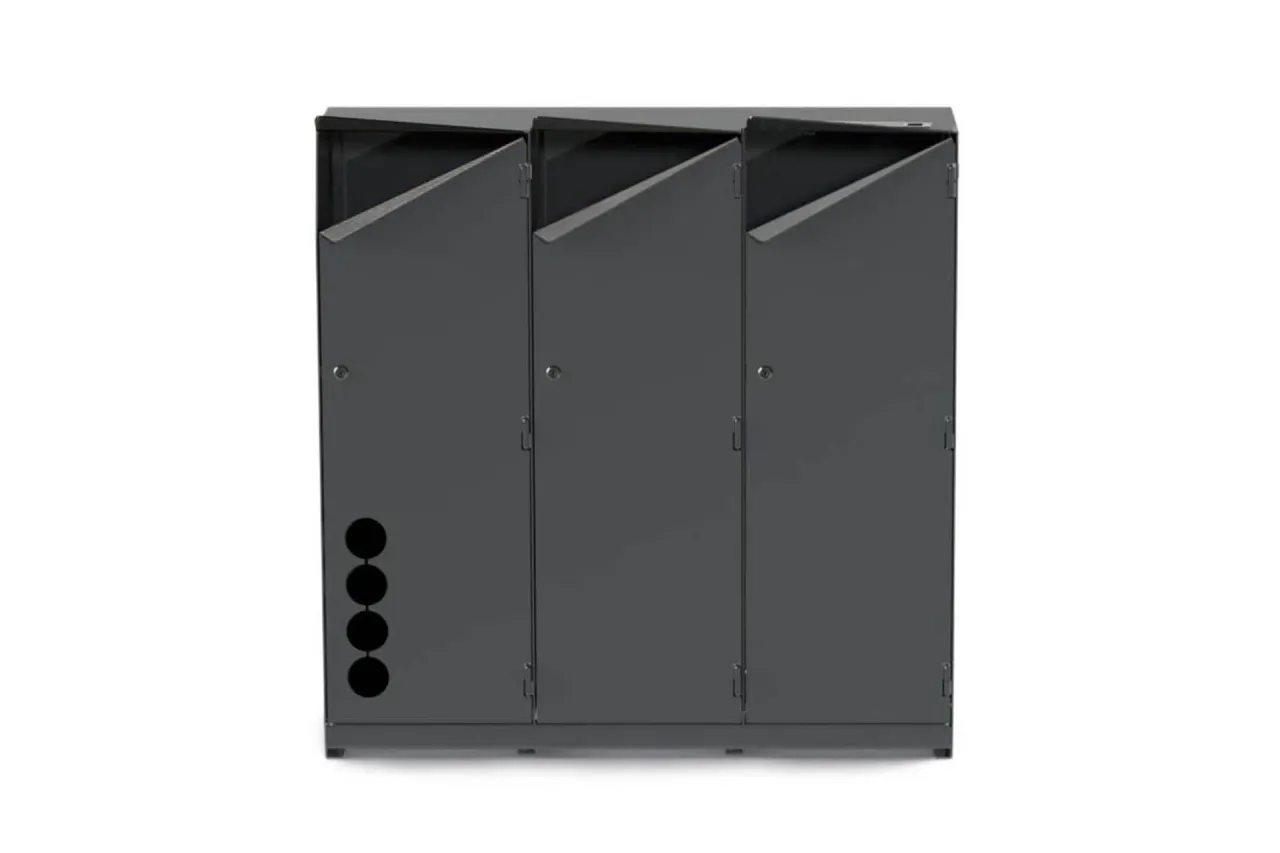
We bring Extery benches, litter bins and contemporary Scandinavian street furniture into public space.
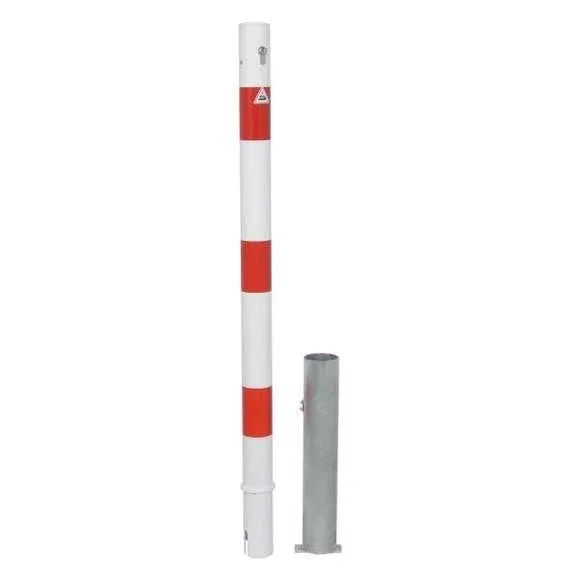
We organise access and pedestrian areas with Schake bollards, arches and barriers in galvanised or stainless steel, flush-mount or surface-fixed.
Guides and articles linked to this solution: operational context, design choices and useful references.

Smart bins, compaction and fill-level sensors: when smart collection pays off and how to assess data, routes and costs. Bunder Waste Technology guide.
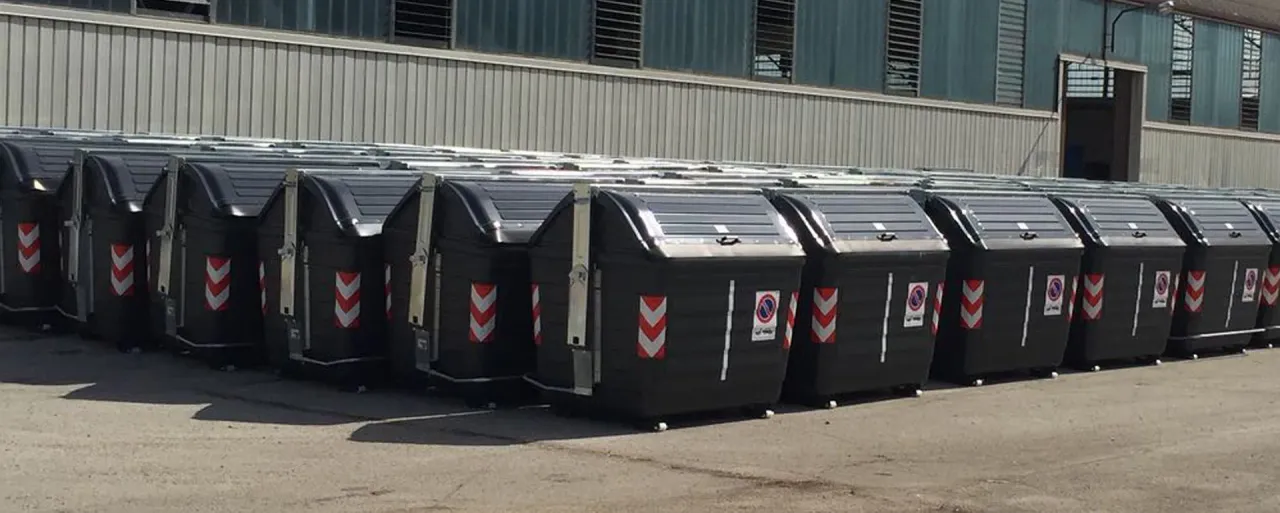
How to draft specs for waste collection containers and equipment: requirements, CAM, technical details and equivalence. Bunder guide for authorities.
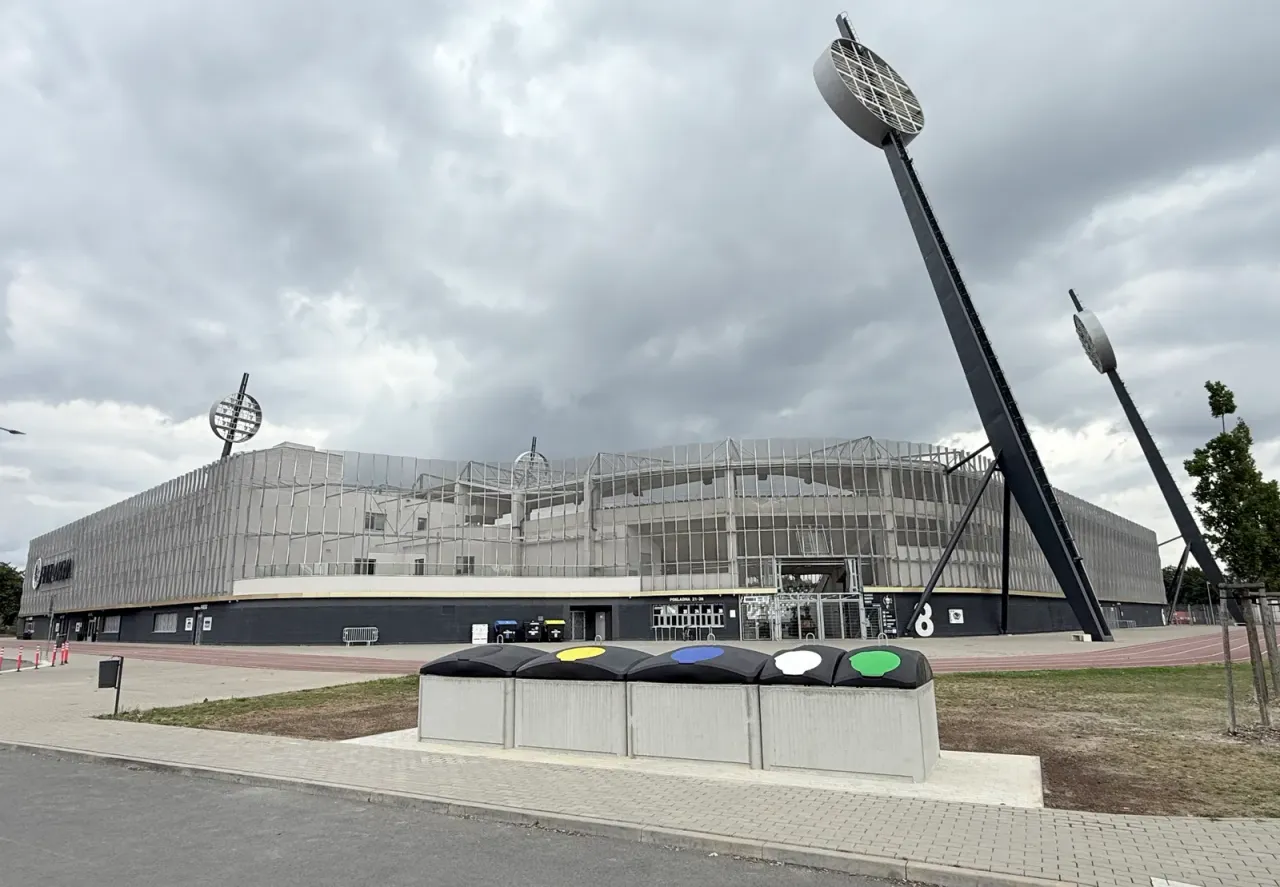
Capacity, streams, layout, traffic, collection vehicles and emptying systems for a neighbourhood eco-island. Bunder technical guide to design.