
Underground bins
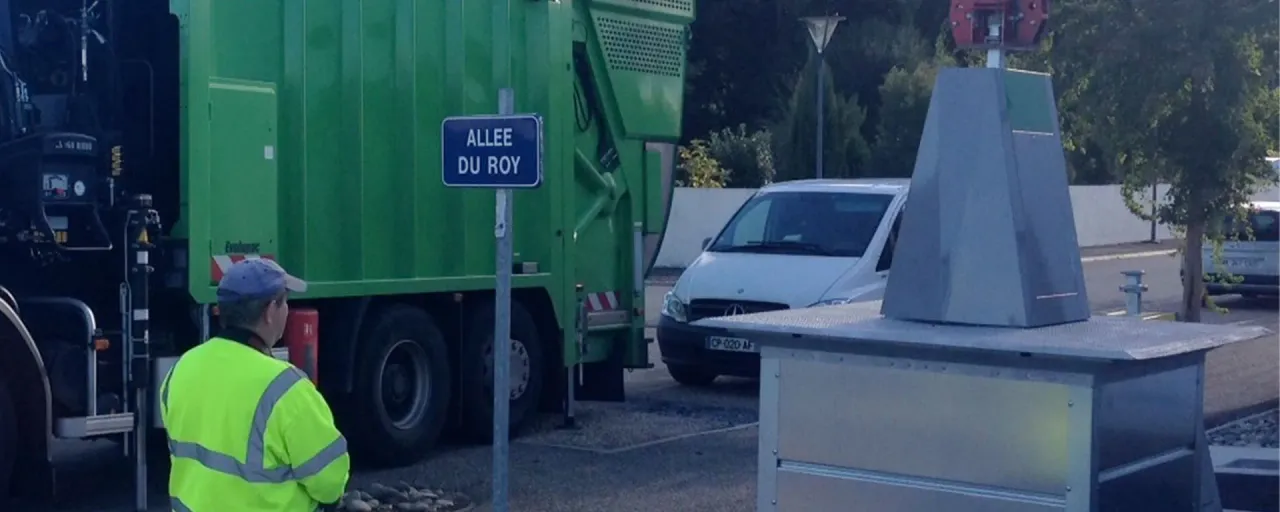
We integrate hydraulic platforms and underground bins from 1,100 to 3,200 L when surface space is tight.
Discover more

Guides and resources
1100, 1700, 2400 or 3200 litres? How to choose bin capacity based on volumes, emptying frequency, streams and vehicles. Bunder insight article.
1,100, 1,700, 2,400 and 3,200 litres are very common volumes in urban waste collection. Choosing among these capacities, however, does not mean simply picking the largest container that fits the available area.
Volume must be coherent with the waste collected, quantities produced, emptying frequency, collection system and vehicle used by the operator.
A 3,200 litre bin nominally holds almost three times the volume of a 1,100 litre container. That does not mean it is always the most efficient choice. In some contexts a 1,100 litre bin may be simpler to manage; in others greater capacity can reduce the number of containers needed or how often crews must visit.
The choice must be made on the system as a whole.
The first distinction is between the container’s nominal volume and the amount of waste that can actually be handled before emptying.
The four capacities considered correspond nominally to:
| Capacity | Nominal volume |
|---|---|
| 1,100 litres | 1.1 m³ |
| 1,700 litres | 1.7 m³ |
| 2,400 litres | 2.4 m³ |
| 3,200 litres | 3.2 m³ |
The step between sizes is significant.
Moving from 1,100 to 1,700 litres increases nominal capacity by about 55%.
Moving from 1,100 to 2,400 litres more than doubles available volume, with an increase of about 118%.
Moving from 1,100 to 3,200 litres reaches almost three times nominal capacity, with an increase of about 191%.
These comparisons are useful, but they are only the first step.
Nominal volume does not say how much material will actually be deposited, at what bulk density it will arrive in the container or when emptying will be needed.
Sizing must therefore start from the service, not from the number on the technical datasheet.
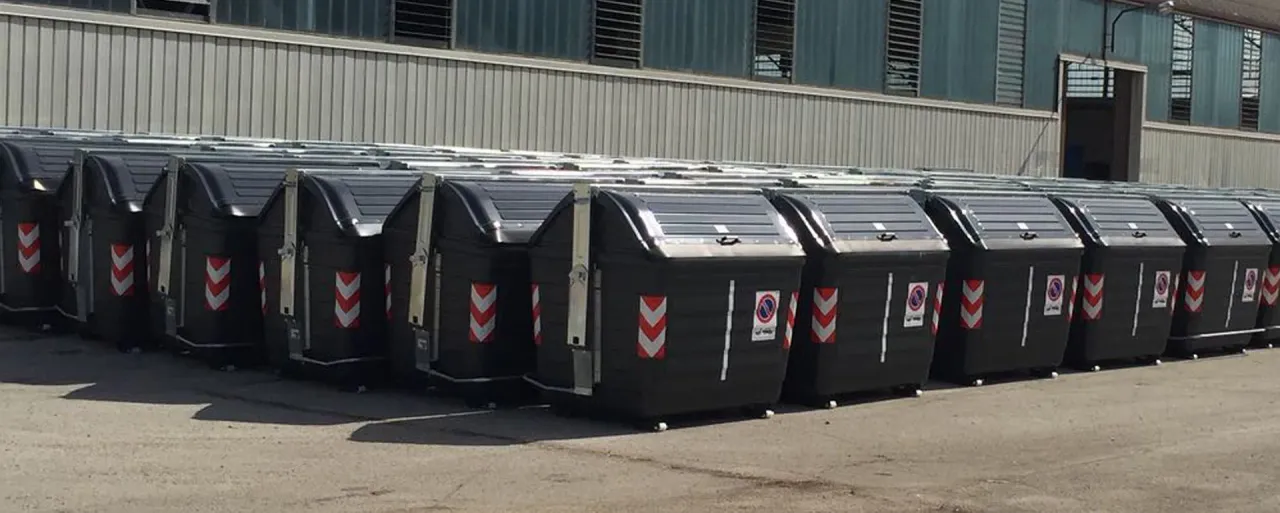
The volume to install depends mainly on the relationship between waste quantities, emptying frequency and collection method.
Before choosing volume it is therefore advisable to know:
Distribution of users also matters. A very large container placed too far from users may solve a volume problem and create another around access to the deposit point.
ISPRA technical guidelines stress that sizing containers and the collection network must be related to inhabitants served, quantities collected and service frequency. The same guidelines underline the importance of the distance users travel to reach the deposit point.
The 1,100 litre bin is widely used in urban collection services.
It is particularly interesting when the operator needs more deposit points across the territory, or when quantities from a single collective user or single point do not justify higher capacity.
A 1,100 litre container may be considered, for example, in:
Volume alone does not determine efficiency.
In a tender or service reorganisation it is useful to ask how many 1,100 litre containers are really needed and where they should be placed.
A layout with more distributed containers can mean more points to service than a solution with higher-capacity containers.
The 1,100 litre size remains relevant in public procurement too. Recent purchase procedures explicitly include supply of 1,100 litre containers for separate collection.
1,700 litres sits in a middle position.
Compared with 1,100 litres it offers about 55% more nominal capacity without reaching the volume of large bins used in higher-capacity collection systems.
It can be attractive when 1,100 litres are insufficient but moving to a much larger volume is not justified by quantities or site conditions.
It is particularly important, however, to assess this capacity together with the emptying system.
In the Bunder range, hydraulic platforms for underground 1,100 and 1,700 litre bins are designed to be emptied with conventional rear-loading compactors.
That makes 1,700 litres interesting in projects where you want more capacity while keeping a defined operational logic.
It does not mean 1,700 litres is always preferable to 1,100.
The right question is rather:
Does the extra volume actually reduce emptying runs or the number of collection points needed without creating new logistics problems?
The step from 1,700 to 2,400 litres takes nominal capacity from 1.7 to 2.4 m³, an increase of about 41%.
Compared with 1,100 litres, available volume is more than doubled.
Capacity at this level can become interesting when a collection point must handle large quantities and you want to concentrate more waste in a single container.
It is a volume often associated with side-loading systems. In the Bunder range, hydraulic platforms for stationary 2,400 litre bins are designed for emptying with side-loading compactors.
This aspect completely changes how the choice should be evaluated.
2,400 litres should not be considered only as a larger bin.
It is part of a system in which bin, platform, collection point and truck must be compatible.
3,200 litres brings nominal capacity to 3.2 m³.
Compared with 1,100 litres, nominal volume is almost triple.
Capacity of this size can help when large quantities must be managed by concentrating them at few collection points.
Again, greater capacity only makes sense if it is coherent with planned frequency and service organisation.
One Bunder configuration for underground systems uses stationary 3,200 litre bins on hydraulic platforms, emptied by side-loading compactors.
That allows certain projects to pair significant volume with side collection.
Assessment must therefore include whether the vehicle can reach the point and operate correctly.
One of the most common errors is treating litres as enough to determine collection need.
A litre measures available volume, not waste mass.
This becomes clear when comparing different fractions.
Paper and cardboard, plastic and very bulky materials can fill available space quickly even when overall weight is low.
Other fractions have a different volume-to-weight relationship.
The same nominal capacity can therefore produce very different fill rates depending on the fraction collected.
ISPRA notes, for example, that larger containers can be particularly relevant for materials with high bulk relative to weight.
Sizing must consider data from the specific collection and not automatically transfer volume from one fraction to another.
The fundamental relationship is simple:
the more often a container is emptied, the less capacity is needed to support the same waste flow; the less often emptying takes place, the greater the capacity required.
In practice other variables apply.
An operator may face route constraints, vehicle availability, shifts, collection days, traffic conditions or particular seasonal needs.
The goal should not simply be “reduce emptying runs”.
The point is to find a balance between:
available volume + service frequency + route organisation + point accessibility.
ISPRA guidelines list service frequency and quantities collected among elements to consider when designing operating methods.
No.
A larger container can reduce the number of containers needed or emptying frequency, but it can also require a specific collection system, more space or a particular loading method.
The cost of a collection run also depends on many elements that cannot be deduced from volume alone.
When comparing 1,100, 1,700, 2,400 and 3,200 litres, the right parameter is not only bin price.
You should consider at least:
Bunder offers a range that includes not only containers but equipment and vehicles for urban hygiene. Assessment can therefore consider the collection system as a whole.
Bin capacity cannot be separated from the loading system.
In Bunder underground configurations, for example, 1,100 and 1,700 litre bins are linked to hydraulic platforms for rear-loading collection, while stationary 2,400 and 3,200 litre bins are linked to systems for side-loading compactors.
This relationship matters when an operator renews or expands its fleet.
If the existing fleet is organised for a particular collection method, changing volume can also mean changing:
A new project allows more freedom.
In an already operating service, compatibility with the existing fleet can become one of the main design constraints.
1,700 litres offers about 54.5% more nominal capacity.
But the right comparison is not:
1,700 is better than 1,100.
It is:
at this collection point, does the extra 54.5% volume deliver enough operational benefit to justify the larger size?
1,100 litres can remain attractive when:
1,700 litres can become attractive when:
The step from 1,700 to 2,400 litres increases capacity by about 41%.
But in the Bunder underground solutions considered in this article, the step also coincides with a different collection method:
So the comparison is not only 700 litres of difference.
It can mean a real change in service organisation.
If an operator moves from one configuration to the other, bin and vehicle should be assessed together.
The step from 2,400 to 3,200 litres increases nominal capacity by about 33%.
It can make sense when the extra volume allows you to:
But if the point is already emptied frequently, the benefit of adding 800 litres may not be enough to change service organisation.
In that case extra volume may simply mean unused capacity.
Sizing must start from usage data.
A container should not be sized thinking:
“The bigger, the better.”
Nor:
“Let’s take the smallest to save money.”
The soundest criterion is to compare volume required by the service with volume available in the container and check how often the point reaches the level that requires emptying.
When possible, historical deposit data helps.
For an operating operator you can analyse:
For a new project, sizing must start from expected territory and user characteristics, with margins coherent with service conditions rather than arbitrary numbers.
For a procurement officer or contracting authority the question is not only “which volume to buy?”.
Technical documentation should coherently define at least:
The topic is relevant because waste CAM adopted with Italian Ministerial Decree of 23 June 2022 no. 255 covers, among other awards, supply of containers and bags for urban waste collection.
This does not mean bin capacity is determined by the CAM.
It means a public supply must be assessed within the technical and environmental framework applicable to the procedure.
For a supply of bins for separate collection, capacity is only part of the specification.
You should also assess:
Material and structure
Steel and polyethylene can meet different needs and must be evaluated against intended use, required durability and container configuration.
Deposit method
Openings must match the fraction collected and expected user behaviour.
Handling system
Wheels, lifting points, lids and components must be compatible with the planned emptying system.
Access
For some services identification or access control may be useful. Bunder indicates that its container range can be completed with systems for access control and fill-level monitoring.
Monitoring
When there is a real operational need, fill control can be integrated into service management.
Capacity is therefore one variable in a much larger solution.
| Capacity | Nominal volume | When it may be interesting | Aspect to verify |
|---|---|---|---|
| 1,100 L | 1.1 m³ | Points with modest volumes or greater distribution of deposits | Emptying frequency and number of points needed |
| 1,700 L | 1.7 m³ | When you need more than 1,100 without moving to larger volumes | Compatibility with collection system and available space |
| 2,400 L | 2.4 m³ | Points with large quantities and ability to concentrate deposits | Vehicle and loading system |
| 3,200 L | 3.2 m³ | Points with high volumes or need for more autonomy between emptyings | Footprint, accessibility and real use of capacity |
The table is not a rigid ranking. The same volume can suit one context and fit poorly in another.
An operator choosing among 1,100, 1,700, 2,400 and 3,200 litres should be able to answer a set of very concrete questions.
How much waste is produced at the point?
Not only on average, but also in peak production periods.
What emptying frequency is planned?
High capacity mainly makes sense when it is used to change service organisation effectively.
Which fraction is collected?
Required volume can change significantly with the material.
Which vehicle must collect?
The loading system must be compatible with the bin.
How much space is there?
Internal volume is not the only footprint to assess.
How many collection points are needed?
Reducing container count is positive only if the point stays accessible to users.
Must the system be underground?
For an underground container project, volume must be assessed together with the platform and emptying system.
Is monitoring needed?
Fill sensors and control systems can help but must answer a real operational need.
1,100, 1,700, 2,400 and 3,200 litres represent different capacities, but none can be named in advance as the best solution.
1,100 litres favours more modest capacity and greater distribution of points. 1,700 litres allows more volume without reaching large bins. 2,400 and 3,200 litres allow concentrating larger waste amounts and, in Bunder underground configurations, are associated with side-loading systems.
The right choice comes from four elements:
waste quantity, collection frequency, emptying system and local conditions.
Add when needed space, accessibility, operating costs, monitoring needs and fleet characteristics.
Bunder offers street, underground and semi-underground collection systems, together with related urban hygiene equipment, and can therefore assess capacity within the overall service configuration.
It depends on quantities collected, emptying frequency and collection system. 1,700 litres offers about 55% more nominal capacity than 1,100, but the increase only matters if the service actually uses it.
It may be evaluated when a collection point must handle large quantities and the collection system is compatible with higher capacity. In Bunder underground configurations it is linked to platforms for stationary bins and side-loading compactors.
3,200 litres can be interesting when high capacity helps manage larger quantities at the same point or reduce emptying frequency. Footprint, accessibility and collection system must still be verified.
No. It depends on deposited quantities and service organisation. Higher capacity only reduces frequency when the extra volume is actually used.
There is no universally correct capacity. Plastic can have high volume relative to weight, so sizing must consider quantities and actual service frequency. ISPRA stresses the relevance of bulk in collection design.
In the Bunder underground range, platforms for stationary 2,400 and 3,200 litre bins are designed for emptying with side-loading compactors.
For Bunder underground bin configurations, 1,100 and 1,700 litre platforms are intended for emptying with conventional rear-loading compactors.
Yes, when the project allows and different configurations are compatible with the service. Choice can depend on fraction, user distribution and characteristics of each point.
Yes. Bunder indicates the possibility of completing its containers with fill-level and access control systems.
At least quantities per fraction, number and type of users, emptying frequency, geographic distribution, possible seasonal variation, collection system and fleet characteristics.
Nominal capacity is the declared geometric volume of the container. The amount actually usable before emptying depends on deposit method, waste collected and service organisation.
A 1,100 litre bin is not simply a smaller version of a 3,200 litre one.
The four formats can fit different collection organisations, with different needs for geographic distribution, emptying frequency, loading systems and vehicles.
Choice should therefore start from service data and arrive at volume, not the other way around.
Bunder has a range of containers for household, door-to-door, street and neighbourhood collection, together with related urban hygiene equipment. Capacity choice can be assessed within the overall system configuration.
Bunder product pages and solutions linked to what this article covers.
We integrate hydraulic platforms and underground bins from 1,100 to 3,200 L when surface space is tight.
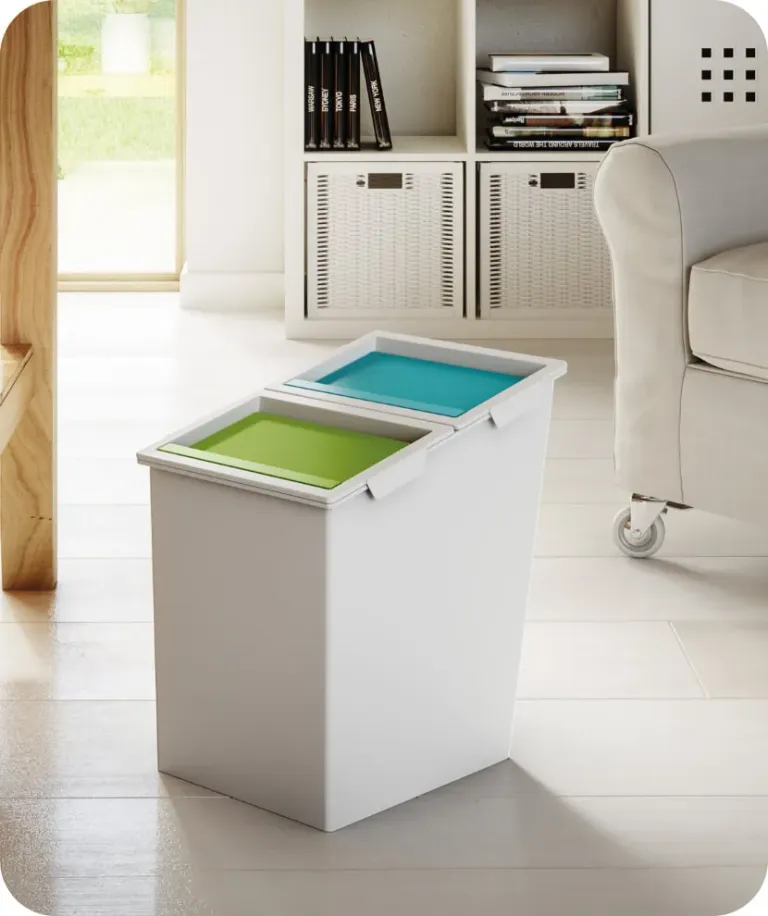
We offer Mattiussi Ecologia bins and kits for home separation, with reusable bags and accessories you can configure by fraction and capacity.
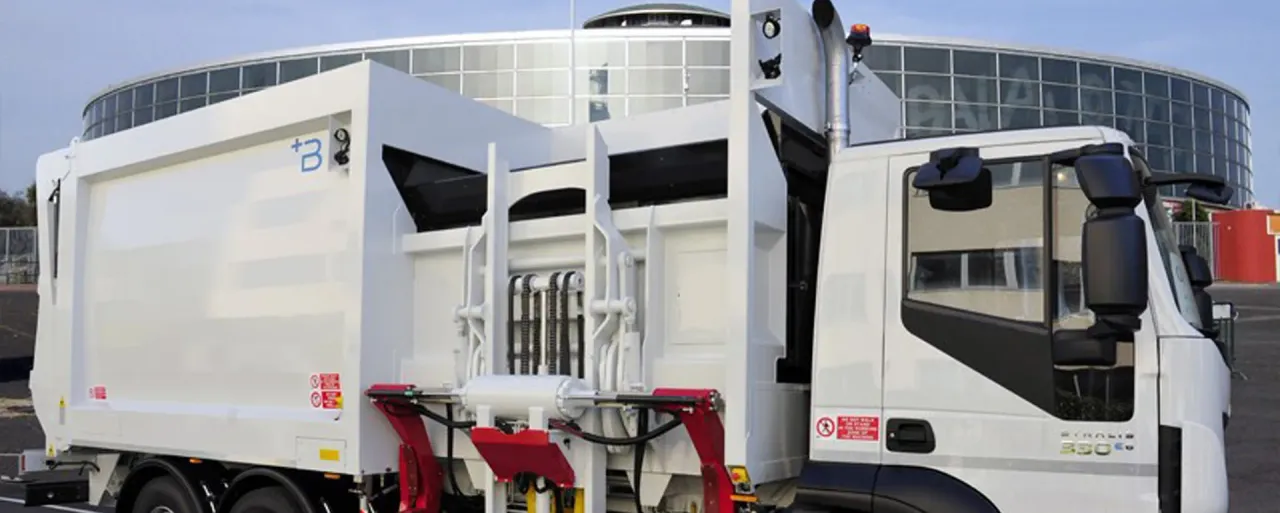
We configure side- or rear-loading refuse compactors on truck chassis, including multi-axle, for every waste type.
Guides and articles linked to this solution: operational context, design choices and useful references.
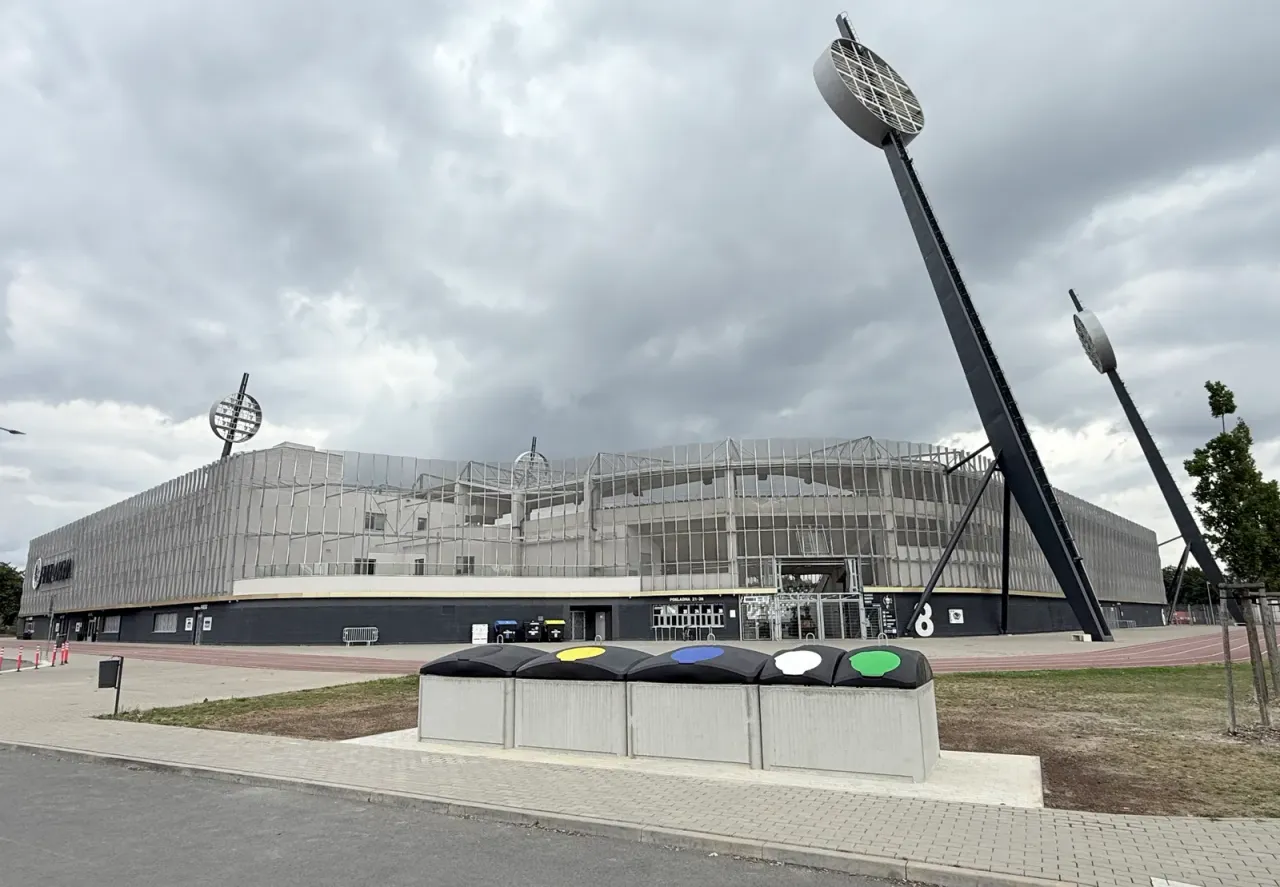
Capacity, streams, layout, traffic, collection vehicles and emptying systems for a neighbourhood eco-island. Bunder technical guide to design.
Comparing side-loading and rear-loading refuse compactors: bins, crew, road layout, fleet and service organisation. Bunder guide to choosing a system.
How to choose underground containers: bells, bin platforms and semi-underground systems by capacity, vehicles and service model. Bunder guide for authorities.