


Seiten- oder Hecklader-Müllverdichter: Welches Sammelsystem passt zu Ihrem Einsatzgebiet?
Seiten- oder Hecklader? Vergleich von Seiten- und Heckbeladung: Behälter, Besatzung, Straßenführung und Flotte. Bunder-Leitfaden.
Artikel lesen

A rear-loading compactor can be configured to work with different types of containers, but compatibility does not depend solely on bin or container capacity. You need to verify the grab and lifting system, container dimensions, attachment points, hopper design and the operating modes planned for the service.
To choose a rear-loading refuse compactor correctly you must therefore start from the containers actually used in your area and from the operations the vehicle will perform. This check helps identify the right bodywork, avoid incompatibilities during tipping and define a configuration with the supplier that matches the collection service.
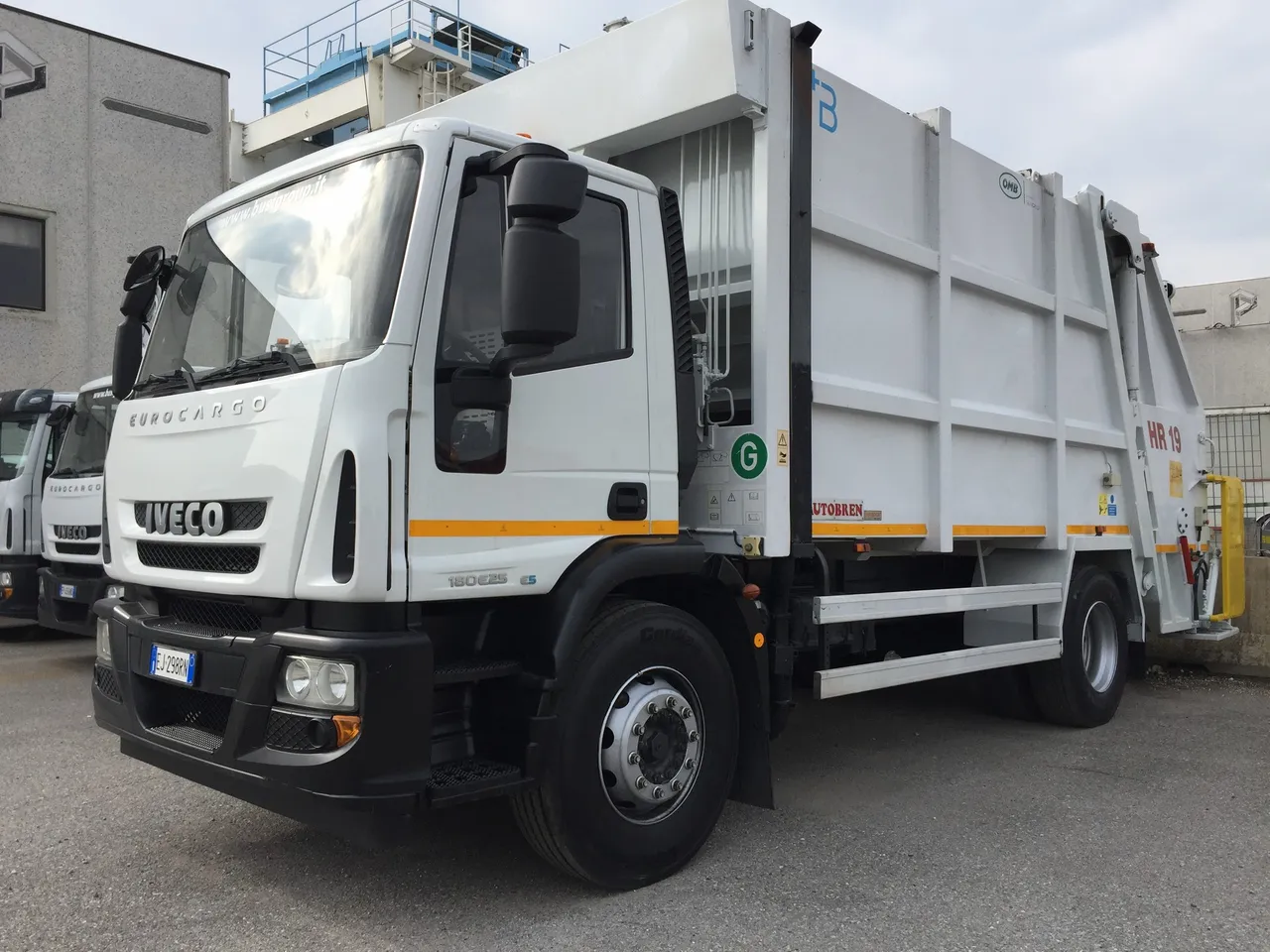
A rear-loading refuse compactor is a vehicle for waste collection and transport, with a waste body and a compaction system. Material is fed into the hopper through the rear of the body and then transferred into the body by the compaction mechanism.
Tipping can be manual or through container lifting and emptying devices, commonly called bin lifters or automatic loading systems (AVC).
This layout supports different uses, from door-to-door collection with wheeled bins to handling larger containers, depending on the body specification. Some solutions can also integrate with satellite vehicles that transfer collected material to the main compactor.
Having several loading modes does not mean every body is automatically compatible with any container. The grab system must be designed and verified against the equipment in use.
Compatibility depends on the lifting device configuration and the containers' build characteristics. Before selecting the vehicle you need to distinguish the main types used in collection services.
| Container type | Points to verify |
|---|---|
| Wheeled bins | Capacity, dimensions, rim geometry and compatibility with the lifting system |
| Mobile containers | Structure, attachment points, grab interface and emptying method |
| Comb-lift containers | Match between container rim and comb lifting device |
| Pin-lift or other interfaces | Attachment type and corresponding lifting device on the vehicle |
| Manual loading | Hopper height and size, access method and operating conditions |
| Satellite vehicles | Hopper geometry, unloading method and compatibility between the two vehicles |
These notes describe the main configurations to assess; they are not a universal compatibility statement. Every combination must be checked against container data and the body specification required.
Wheeled bins are widely used in door-to-door services and at domestic, commercial and trade premises.
To use them with a rear-loading compactor you must verify compatibility between the bin rim and the lifting system fitted to the vehicle. Container size, shape and structure can also affect handling.
Nominal capacity in litres alone is not enough to confirm automatic emptying. Two containers with the same capacity can have different builds and need specific checks.
Mobile containers can also be served by a rear-loading refuse compactor if the loading system is set up for that container type.
In these cases it is important to verify the attachment system, overall dimensions, container weight and lifting device characteristics.
If the service uses several container types, checks must cover every configuration in the area. This matters especially for operators working across municipalities or zones with non-uniform collection systems.
The lifting device is one of the most important elements in a rear-loading compactor specification.
Bin lifters move and empty containers into the hopper, reducing manual handling. Device characteristics must match the containers used in the service.
Configurations to review include:
The choice should not rely only on device availability, but on the actual match between grab system, container and vehicle.
For this reason it is advisable to give the manufacturer or supplier technical sheets for bins and containers already in use, plus photos of attachment points and equipment in the field.
When requesting a quote for a rear-loading compactor, share enough information to assess the whole collection system, not only the vehicle.
A request based only on body volume or container capacity may miss factors that affect day-to-day operation.
Before fixing the configuration, clarify the following points.
1. Which containers must the vehicle empty?
State type, nominal capacity, dimensions, build features and grab system for bins and containers. If several models are in use, provide a full list.
2. Which loading system is required?
Specify whether you need manual loading, a bin lifter, an automatic loading system or a combination of solutions.
3. Which containers must be compatible at the same time?
If the service uses different containers, check whether one body can handle them all or whether extra devices or dedicated setups are needed.
4. What are the service characteristics?
Describe collection modes, waste fractions, number of tipping points, round frequency and material moved per shift.
5. Must the vehicle work with satellite vehicles?
In services using smaller vehicles for narrow streets, historic centres or hard-to-reach areas, confirm whether material can be transferred to the main compactor.
6. Which technical documents and safety requirements apply?
Request documentation for the vehicle, lifting device and complete bodywork. Check conformity with applicable technical standards, in particular the UNI EN 1501 series, for the specific vehicle configuration.
This information lets the supplier assess the solution on concrete data and flag limitations before the offer is finalised.
The price of a rear-loading refuse compactor is not driven by a single feature. It depends on the combination of chassis, bodywork, loading system and service requirements.
Main factors affecting cost include:
A reliable quote therefore requires the operating context and the body specification you need.
Request pricing for your configuration: contact Bunder Company with your collection type, containers in use and service characteristics.
A rear-loading compactor must be assessed as part of a system made up of vehicle, lifting device and containers. Correct matching between these elements is essential for loading operations that fit the service.
For municipalities and environmental operators, advance verification is especially important when the fleet must handle different containers, several collection modes or integration with satellite vehicles.
Bunder Company selects and configures side- and rear-loading refuse compactors through specialist manufacturers, supporting authorities and operators in assessing service requirements and defining bodywork.
To explore available solutions and find the right configuration, see the Bunder refuse compactors page or request a technical and commercial assessment.
Leitfäden und Artikel zu dieser Lösung: Betriebskontext, Auslegung und nützliche Hinweise.
Seiten- oder Hecklader? Vergleich von Seiten- und Heckbeladung: Behälter, Besatzung, Straßenführung und Flotte. Bunder-Leitfaden.
So bewerten Sie einen Abfallpresswagen für die Sammlung: Servicemodell, Behälter, Strecken, Fahrgestell, Nutzlast und technische Anforderungen.
Leitfaden für Kommunen und Entsorger: wie der Greifarm des automatischen Seitenladers arbeitet, welche Behälter er aufnimmt und was in die Ausschreibung gehört.